

What's new in Vulcanexus: human-robot interaction and AI task planning for ROS 2
Between May and September 2026, eProsima presented three important developments in Vulcanexus, one of the building blocks of the ARISE framework: a modular toolkit for human-robot interaction, a more scalable way to share data about people, and a beta framework for AI-based task planning.
A robot working alongside people may need to know who is around, understand what they say and decide what to do next. Each of those capabilities depends on software that ROS 2 developers would otherwise have to build and connect themselves.
ARISE is a European project developing open technologies for human-centric robotics applications. Vulcanexus, the ROS 2 tool set developed and maintained by eProsima, is part of its technical foundation. Its latest developments address the three needs above.
Vulcanexus HRI: perception and interaction modules for ROS 2
Vulcanexus HRI is a set of modules that give a ROS 2 application information about the people around the robot, and ways to communicate with them. It covers face detection, human pose estimation, emotion recognition based on facial expressions, visual displays, speech-to-text and text-to-speech. Shared message definitions let these modules work together as one system.
Each module can run on its own or alongside the others. A team could use pose estimation to know where an operator is standing and text-to-speech to tell them a task is finished, without redesigning the rest of the application. Because Vulcanexus HRI runs within existing Vulcanexus and ROS 2 setups and builds on the latest Fast DDS features, it can be added to applications that are already running.
hri_msgs: keeping communication manageable when several people are present
Handling data about one detected person is relatively straightforward. As several people are tracked simultaneously, however, the communication architecture becomes more demanding. In many HRI designs, each detected person gets its own namespace, with its own topics, publishers and subscribers. The approach is clear, but the communication graph grows with every new person in the scene, and large ROS 2 systems can become saturated.
hri_msgs takes a different route. It relies on Fast DDS Keys, which let a single topic carry many instances of the same data type, each with its own identifier. All detected faces can share one topic and still be told apart. It also aggregates related data: a face’s region, landmarks and pose can travel in a single message instead of on separate topics.
The outcome is fewer topics and communication entities, less middleware overhead and simpler discovery. A smaller graph is easier to visualise and debug, which matters when an application moves from a demo to a real deployment.
VulcanAI: from a goal to a plan the robot can execute
Robots can already perceive, navigate, call services and execute actions. As applications grow, the harder part is deciding what to do first, what can run in parallel and how to recover when a step fails.
VulcanAI is a framework that uses language models as planning assistants. Given a request, it breaks it into sub-tasks, makes explicit which steps run in sequence and which in parallel, and selects the tools to carry them out from a registry. Steps can pass results to one another, and an iterative manager checks progress and regenerates the plan when needed.
VulcanAI comes with default ROS 2 tools for nodes, topics, services, actions, parameters and interfaces, so it can also help inspect and debug running systems. It sits on top of the existing middleware rather than replacing it. The project is in beta and under active development, so for now it is best suited to experimentation.
Why this matters for ARISE
Taken together, these developments cover different layers of the path from perceiving a person to acting on a request. For ARISE, they strengthen the middleware capabilities available for building human-centric robotic applications: Vulcanexus HRI provides reusable perception and interaction modules, hri_msgs makes human-related data exchange more manageable as applications scale, and VulcanAI extends the same ROS 2 environment with AI-based planning and tool-aware execution.
Get started
To try Vulcanexus HRI, see the Overview section of the Vulcanexus documentation
The original articles from eProsima:
- Vulcanexus HRI, building the next generation of human ware robotic systems. (28 May 2026)
- Vulcanexus HRI, a smarter way to scale human robot interaction in ros2 (18 September 2026)
- Introducing VulcanAI planning and reasoning for robotic applications (23 September 2026)
Vulcanexus continues to evolve, with new capabilities and improvements being introduced over time. We’ll be sharing regular updates as new developments become available, so stay tuned for what’s next.
On the Ground Insights Informing the SSH Framework
ARISE and FIWARE in the ADRA Book: Building Open Digital Infrastructures for Robotics
The recently published open-access book “Artificial Intelligence, Data and Robotics: Foundations, Transformations and Future Directions” provides a comprehensive overview of the technologies and initiatives shaping Europe’s digital future.
Published within the framework of the AI, Data and Robotics Association (ADRA), the book reflects the collective work of the European AI-Data-Robotics ecosystem, bringing together researchers, innovation projects, and industry stakeholders working to accelerate the development and deployment of these technologies across Europe.
Among the initiatives featured in the book is ARISE, together with its sister projects FORTIS and JARVIS, which are highlighted in the chapter “Advancing Industrial Collaboration: The Next Generation of Human-Robot Interaction.”
The book reflects the broader strategic vision behind the European AI, Data and Robotics Partnership, which aims to strengthen Europe’s leadership in these technologies while ensuring that innovation remains human-centric, trustworthy and aligned with European values.
Artificial intelligence, robotics and data technologies are increasingly converging to create new possibilities across sectors such as manufacturing, mobility, environmental monitoring and healthcare. This convergence is explored in the chapter “Data, AI, Robotics: Transformative Power in Industry 5.0” where the authors (among them partners in the ARISE project Polimi, Engineering and Cartif) explain how Industry 5.0 builds on the foundations of Industry 4.0 by integrating human-centric, resilient and sustainable manufacturing practices. This chapter reviews a series of European initiatives and industrial pilot cases demonstrating how AI, robotics and data technologies can support circular manufacturing processes, data sharing across value chains and new decision-support capabilities through technologies such as digital twins and real-time industrial data infrastructures.
However, unlocking the full potential of these technologies requires more than individual innovations. It requires digital infrastructures that allow heterogeneous systems to interoperate and share data seamlessly.
This is where open digital infrastructures become essential. Across the European ecosystem, researchers and innovators are increasingly focusing on building interoperable platforms and architectures that allow AI systems, robotics technologies and data infrastructures to work together across domains.
ARISE: contributing to the next generation of human-robot collaboration
In our chapter, we explore (together with our sister projects JARVIS and FORTIS) the evolution of human-robot interaction (HRI) and the technological foundations required to support collaborative robotics in industrial environments.
In particular, we present the ARISE framework, designed to accelerate the deployment of collaborative robotics systems that integrate human expertise with advanced automation technologies. Through experimentation in Testing and Experimentation Facilities (TEFs) and collaboration with SMEs, ARISE aims to bridge the gap between research and real industrial deployment.
Our work focuses on enabling more intuitive interaction between humans and robots, safer collaboration in industrial settings, scalable robotics deployments, and the integration of artificial intelligence into industrial decision-making processes.
FIWARE and ROS2: an open middleware for industrial robotics
A key innovation highlighted in the book is the architectural approach used in ARISE.
The project integrates FIWARE technologies with ROS2 robotics frameworks, creating an open middleware that enables interoperability between robotic systems, industrial applications and AI services.
This architecture allows data to flow seamlessly between robots, digital platforms and industrial systems, enabling:
real-time monitoring of robotic operations
integration of AI-based services
coordination between robots and industrial systems
scalable deployment of robotics applications.
By combining ROS2 robotics capabilities with FIWARE context-management technologies, ARISE demonstrates how open-source platforms can create a flexible and interoperable digital infrastructure for robotics.
This interoperability layer is essential for enabling complex industrial environments where robots, machines, sensors and digital platforms must work together.
Interoperable data infrastructures for AI and robotics
The role of FIWARE technologies is not limited to robotics architectures.
In another chapter of the book, dedicated to the CyclOps project, “CyclOps: Leveraging Semantic Technologies for AI and Data Life Cycle Management and Governance”, FIWARE technologies appear again through the use of NGSI-LD context brokers, which support interoperable data exchange and semantic data management across distributed environments.
FIWARE-based interoperability approaches are also referenced in discussions around emerging data ecosystems, such as in the chapter “Toward the Irish Mobility Data Space: Challenges, Opportunities, and Requirements”, which explores the technological foundations needed to enable cross-domain mobility data spaces.
Context brokers such as Orion-LD, Stellio and Scorpio, available within the FIWARE ecosystem, enable the storage, retrieval and sharing of contextual information across domains such as smart cities, Industry 4.0 and IoT applications.
These technologies illustrate how standardized data infrastructures can support the integration of AI and robotics systems within broader digital ecosystems.
Toward open digital infrastructures for robotics
Taken together, the projects and technologies presented in the book highlight an important transformation in the way Europe approaches technological innovation.
Rather than focusing solely on isolated technological components, the European AI-Data-Robotics ecosystem is increasingly building open digital infrastructures that allow different technologies to work together across sectors and domains.
Within this vision:
ARISE contributes to the development of human-centric robotics systems
FIWARE provides the interoperable data infrastructure that connects digital services, AI applications and industrial systems
This combination of open platforms, interoperable data architectures and collaborative robotics represents a key step toward the realization of Industry 5.0.
The inclusion of ARISE in this ADRA publication highlights the project’s contribution to Europe’s rapidly evolving AI, Data and Robotics ecosystem. By combining open-source technologies, interoperable architectures and human-centric design, ARISE demonstrates how collaborative robotics can be deployed in ways that enhance human capabilities while supporting industrial innovation. At the same time, the broader presence of FIWARE technologies across different chapters of the book reflects the growing importance of open standards and interoperable data infrastructures as foundations for the next generation of digital systems.
Together, initiatives such as ARISE and FIWARE are helping to build the open digital infrastructures that will support Europe’s future in AI, data and robotics.
VITAWELD: Vision, Intelligence and Human-Robot Teaming for the Future of Welding
VITAWELD tackles one of the most persistent challenges in industrial manufacturing: welding large metal components without compromising quality, efficiency, or accessibility. Traditional processes struggle with heat-induced distortions, late detection of defects, and manual parameter adjustments that slow production and introduce variability. Programming industrial robots for such tasks requires advanced technical expertise, creating a barrier for companies with limited resources.
The solution brings a fundamentally different approach to welding automation
VITAWELD blends advanced computer vision, AI, and natural user interfaces to keep the operator in control while enhancing their capabilities. The system enables robot programming through natural language and real-time visualization in augmented reality, making adjustments intuitive and immediate. AI-powered vision algorithms detect potential defects as they happen, while automated parameter optimization ensures repeatability and minimizes waste. Built on a modular ROS 2 and FIWARE architecture, the platform can adapt to different industrial contexts and scale with changing needs.
Within the ARISE project, VITAWELD exemplifies how collaborative robotics can democratize access to advanced automation. FIWARE integration ensures interoperability and supports a standards-based approach, making the solution replicable across industries. Most importantly, it reflects a vision where technology empowers rather than replaces, aligning closely with the principles of Industry 5.0.
The impact is measurable
Early projections indicate a reduction of more than 50% in robot programming time, over 30% improvement in first-time-right weld quality, and the ability to train new operators in less than two days. Energy consumption could be reduced by 15%, with significant savings in material waste. These advances not only improve productivity but also make welding safer and less physically demanding, encouraging greater diversity in the workforce.
Market potential is equally strong
The global industrial human-robot interaction market is expected to reach $8.6 billion by 2025, with the large-component welding segment valued at $1.2 billion. By focusing on amplifying human capabilities rather than replacing them, VITAWELD differentiates itself from conventional automation. Its modular design and human-centered philosophy allow rapid adaptation to other processes such as TIG, MIG, and additive manufacturing, delivering a return on investment in just 18 to 24 months.
Inclusivity is embedded in the design
Interfaces are multilingual and configurable, with universal iconography and color-blind-friendly visualizations. Ergonomic considerations accommodate operators of different heights, handedness, and working styles. The system can adapt to local cultural norms in units of measurement, alerts, and training materials, ensuring usability across global manufacturing environments.
VITAWELD represents more than a technical solution—it redefines the relationship between people and machines in industrial welding. By combining precision, adaptability, and inclusivity, it sets a new standard for human-robot teaming, one where innovation strengthens human expertise, fosters sustainable manufacturing, and builds a safer, more productive future.
Crafting the Future: How SUNRISE Agent AI is Reimagining Human-Robot Collaboration in Manufacturing
The Operator’s New Co-Pilot: A Partnership with Robots
In the world of manufacturing, technology is often seen as a replacement for human labor. But at Plastifer, a leader in cosmetics and health products, we’re helping to redefine this relationship with SUNRISE (Smart Unified Network for Cosmetic), our innovative experiment under the ARISE project. SUNRISE is not about replacing workers; it’s about empowering them. By integrating AI-driven robotics with intuitive gesture and voice controls, we are creating a new type of human-robot collaboration that boosts efficiency, enhances safety, and elevates the role of the operator.
Beyond the Assembly Line: Tackling Customization at Scale
Plastifer faces a unique challenge in custom manufacturing. With a vast catalog of over 3,000 sink designs and 500 ventilator models, the production process is complex and demanding. Manual machine reprogramming and quality checks for each unique product are time-consuming and error-prone, limiting scalability and hindering efficiency. Operators spend hours on complex configurations, which can lead to inconsistent quality and a lack of automation. SUNRISE directly addresses these pain points by streamlining operations and freeing workers from these repetitive tasks.
From Isolation to Collaboration: Peer-to-Peer Production Intelligence
One of SUNRISE’s Agent most powerful features is its ability to connect workstations into a true collaborative network. Through a patent-pending peer-to-peer (P2P) communication layer, different stations—such as the quality control bench and the pick-and-place cell—can exchange information in real time without relying solely on central servers. This means that if the quality station detects a defect, it can instantly alert the pick-and-place robot to adjust handling, prevent errors, and ensure that only compliant parts move forward. The result is a living, adaptive production environment where every station “talks” to the others, creating a seamless flow of data and actions that further enhances efficiency, reduces waste, and builds resilience into the manufacturing process.
Edge Intelligence with Privacy at the Core
SUNRISE Agent also pioneers the use of distributed Large Language Models (LLMs) running directly on edge devices within the factory. This architecture allows the system to leverage historical production data to generate new product configurations—such as entirely new sink designs—without ever transferring sensitive information outside the premises. By keeping AI processing local, SUNRISE ensures full compliance with GDPR, protects proprietary manufacturing know-how, and minimizes cybersecurity risks. This privacy-by-design approach means manufacturers can benefit from generative AI innovation while retaining complete control over their data, enabling creativity and customization at scale without compromising confidentiality.
Intuitive Innovation: Gesture and Voice Control in Action
At the heart of SUNRISE is an AI-powered robotics solution that puts the operator in control using the most natural interface of all: human interaction. The system leverages the Tactigon SOUL suite, which enables operators to use natural voice and gesture commands to interact with robots. For example, an operator can simply use a voice command to recall a specific custom sink model from a pre-populated database. The system’s AI then adapts the robot’s behavior based on historical data, dynamically reprogramming machines to match the new product specifications. This seamless interaction, which requires no coding skills, allows operators to quickly switch tasks, ensuring a more fluid and efficient workflow.
The Digital Backbone: FIWARE, ROS 2, and the ARISE Community
SUNRISE productionis built on a robust, open-source technological foundation that ensures scalability and interoperability. The solution integrates IoT sensors for real-time quality monitoring. FIWARE’s Orion-LD and NGSI-LD standards manage these live data streams, providing operators with real-time dashboards and alerts for things like potential defects. This allows for proactive adjustments and a 30% reduction in errors. The entire system is built on ROS 2, with key modules contributed as open-source implementations to the ARISE Catalog. These reusable components, including an HRI module for gesture/voice control, an IoT and FIWARE module, and an adaptive AI module, ensure that the technology can be adapted for use in other industries like food, beverage, and electronics.
The ROI of Empathy: Business Impact and Sustainability
The human-centric design of SUNRISE translates directly into tangible business benefits. By automating repetitive and physically demanding tasks, the project is projected to boost operator job satisfaction by 20-25% and reduce production errors by 30%. This focus on worker well-being leads to a significant increase in production efficiency of 15-20%. By reducing downtime and material waste, SUNRISE Agent also aligns with EU Green Deal goals, fostering sustainable manufacturing. This innovative approach, which targets a serviceable market of €17.6M within the growing collaborative robot sector, proves that a more empathetic and inclusive workplace is also a more profitable one.
Revolutionizing Welding and Additive Manufacturing: The ROBIN Journey – Empowering Humans with AI-Driven Innovation
In the heart of Norway’s innovation landscape, where cutting-edge research meets real-world industrial needs, the ROBIN project was born. As partners in this biparty initiative—3D-Components AS (3DC) with its proprietary RobTrack AI system and Mechatronics Innovation Lab (MIL) with its world-class testing facilities—we’re on a mission to reshape robotic welding and additive manufacturing (AM). Launched under the ARISE project, ROBIN isn’t just about automation; it’s about creating intelligent, interactive workspaces that empower operators, minimize waste, and drive sustainability. Drawing from our combined expertise in AI-driven robotics and large-scale industrial validation, we’re building an open-source ecosystem that puts humans at the center while harnessing the power of ROS 2 and FIWARE. Let’s dive into how ROBIN is turning manufacturing challenges into opportunities for smarter, greener production.
The Challenge: Breaking Barriers in Welding and AM
Imagine a welding shop floor where operators wrestle with endless trial-and-error to dial in the right parameters—voltage, current, wire feed rate, robot speed—for each unique job. In robotic welding and AM, static settings and proprietary systems dominate, leading to defects, wasted materials, and hours lost to manual adjustments. Data from sensors and machines piles up, but it’s trapped in brand-specific silos, rarely shared or fully utilized. The result? Inefficient processes, high costs, and environmental strain, with global welding industries contributing to thousands of tons of daily waste and CO2 emissions.
At 3DC, we’ve tackled these issues through our RobTrack prototype, validated at TRL5 for parameter optimization. MIL, with its 2,000 m² state-of-the-art facility, sees these challenges across its 100+ industrial partners, from aerospace to maritime. The core problem is clear: a lack of standardized, data-driven tools that empower operators to make quick, informed decisions without extensive expertise. ROBIN was born to address this, offering a brand-agnostic platform that streamlines parameter selection, enhances quality, and keeps humans at the heart of the process.
The Solution: A Smart, Collaborative Ecosystem
ROBIN is a game-changer, integrating 3DC’s RobTrack with open-source ROS 2 and FIWARE middleware to create a seamless, intelligent system. At its core, RobTrack uses laser profilometry sensors mounted on welding torches, capturing real-time data like bead geometry and process metrics. Paired with GPU-accelerated AI, it delivers precise parameter recommendations, ensuring stable, high-quality welds. ROS 2 powers intuitive human-robot interaction, allowing operators to teach toolpaths and adjust settings via user-friendly interfaces. FIWARE’s Orion-LD Context Broker aggregates multi-source data, and triggers instant alerts for deviations—think catching a weld imperfection before it becomes a costly flaw.
This closed-loop system transforms raw data into actionable insights. Operators receive AI-driven suggestions, visualized on dashboards, to optimize parameters in real-time, reducing trial-and-error. Unlike proprietary systems, ROBIN’s open-source framework fosters interoperability across brands, enabling knowledge sharing while safeguarding IP. The result is a flexible, scalable platform that delivers consistent quality and efficiency, validated at MIL’s industrial-grade facilities for real-world reliability.
Human-Centricity: Operators as Strategic Innovators
ROBIN flips the script on automation’s reputation as a job replacer. Instead of sidelining workers, it positions them as strategic decision-makers. Operators interact with robots through intuitive ROS 2 interfaces, approving AI recommendations without needing coding skills. This reduces cognitive load and physical strain, as repetitive parameter tuning is automated, freeing workers for creative problem-solving. At MIL, where academic research meets industry, we’re refining these interfaces with operator feedback, ensuring they’re ergonomic and inclusive—multilingual and adaptable for diverse skill levels and abilities.
By empowering operators, ROBIN boosts job satisfaction and safety. It cuts training time, making advanced manufacturing accessible to novices and experts alike. Our approach aligns with Industry 5.0’s vision: technology that amplifies human expertise, creating 97 million new collaborative roles by 2025, per industry forecasts. From shop floor to boardroom, ROBIN fosters a culture where humans and AI work in harmony, driving productivity and engagement.
Contribution to ARISE: Pioneering Open Innovation
ROBIN is a cornerstone of ARISE’s mission to advance standardized, human-centric automation. By releasing our integrated ROS 2 and FIWARE application on GitHub, we’re fostering an open-source ecosystem that encourages community contributions while protecting proprietary AI algorithms. This open HRI module—covering data ingestion, real-time monitoring, and parameter optimization—sets a new standard for interoperability. It allows manufacturers to integrate ROBIN with existing systems, breaking free from vendor lock-ins.
Our collaboration leverages MIL’s testing prowess and 3DC’s AI innovation, creating a reusable framework for welding and AM. This supports ARISE’s goal of scalable, distributed robotics solutions, applicable not just to welding but to adjacent fields like aerospace component fabrication. By sharing knowledge through open standards, we’re accelerating industry-wide adoption of smart manufacturing.
Market Impact: Driving Sustainability and Competitiveness
ROBIN taps into the $4.76 billion arc welding equipment market (6.1% CAGR, reaching $8.11 billion by 2032), addressing a critical need for efficient, sustainable production. By optimizing parameters, it slashes material waste and energy consumption, aligning with EU Green Deal goals to reduce environmental impact. We estimate significant reductions in global welding waste and CO2 emissions, supporting circular economy principles.
For manufacturers, ROBIN delivers measurable value: improved first-time-right quality, reduced setup times, and enhanced flexibility for variable workloads in sectors like automotive, energy, and maritime. For operators, it means safer, more engaging roles with less manual drudgery. MIL’s “Test before Invest” methodology ensures these benefits are validated, building trust among SMEs and large firms. By fostering inclusivity and upskilling, ROBIN strengthens Europe’s industrial sovereignty and workforce resilience.
The Road Ahead: A Blueprint for the Future
ROBIN is more than a project; it’s a vision for manufacturing where technology empowers people and protects the planet. We’re starting with pilots at MIL, refining the system for real-world impact. Looking ahead, we’ll expand into diverse industries, leveraging partnerships with academic and industrial leaders to scale innovation. Our gratitude goes to ARISE for enabling this journey.
Join us in shaping the future of welding and AM. Explore our open-source app on GitHub, request a demo at MIL, or connect to collaborate on smarter, greener manufacturing. ROBIN is proof that humans and AI can build a better, more sustainable industry together.
Unlocking Sustainable Logistics: How RISES is Making Block Storage Smarter and Safer
Block storage, a foundational method in logistics, is a simple, cost-effective way to stack pallets directly on the ground. It is a staple in industries like beverages, consumer goods, and hygiene products. However, this simplicity comes with significant challenges, especially in dynamic staging areas used for loading and unloading. These environments are characterized by high labor costs, which account for 75% of expenses, and significant safety risks. Approximately 11% of manually operated forklifts are involved in accidents annually, a statistic that highlights the urgent need for a safer solution. RISES (Robotics Integration for Smart Efficiency and Safety) is our groundbreaking experiment under the ARISE project designed to tackle these very issues. We’re integrating robotic forklifts with an AI-driven management system to create a new standard for sustainable logistics that empowers workers and optimizes operations.
Practical Benefits for Today’s Warehouse
RISES delivers measurable, real-world benefits that transform brownfield block storage operations. Our solution minimizes infrastructure needs with a modular, plug-and-play system. Combined with the SLAPStack OS, companies can see a reduction in operating expenses by up to 70% and an improvement in order processing by up to 50%. The return on investment (ROI) is achieved within two years. While traditional automation projects often require 9 to 18 months for integration, RISES can be deployed within just a few weeks thanks to its simulation-based approach. This drastically shortens time-to-value and makes automation accessible to both large enterprises and SMEs.
The Technology Behind the Transformation
At the core of RISES is SLAPStack OS, an AI-based operating system for block storage management. It orchestrates autonomous forklifts in dynamic staging areas by combining real-time data from multiple sources, including LiDAR, Time-of-Flight (ToF) cameras, and safety sensors of robotic forklifts. This advanced technology enables selective obstacle recognition, allowing forklifts to differentiate between static and dynamic elements, such as workers, reacting under 200 ms and ensuring human safety. In dynamic staging areas, RISES introduces coordinated access with virtual barriers, ensuring human-robot collaboration without interference. The system also leverages FIWARE technologies, specifically the Orion-LD Context Broker and NGSI-LD standards, for real-time condition monitoring and automated alerts. This provides real-time insights, for example, into forklift locations, battery levels, and potential bottlenecks in the warehouse.
The Human-Centric Warehouse
RISES is a prime example of Industry 5.0, where technology works to augment, not replace, human capabilities. By automating high-risk, monotonous tasks like stacking and navigation in staging areas, RISES reduces physical strain and accident risks. This allows workers to shift their focus to higher-value responsibilities, such as process oversight and quality control. The intuitive SLAPStack WebApp and reduced physical demands make warehousing roles more accessible to diverse worker profiles, including individuals with physical limitations. This focus on human-centricity not only boosts job satisfaction and retention but also helps address the industry’s skilled labor shortage.
Our Commitment to Open Standards
A key component of RISES is its commitment to open-source innovation. We are contributing several open-source ROS 2 modules to the ARISE Catalog. These include a HRI and FIWARE Monitoring Module for real-time alerts, an Integration Module for fleet management. By adhering to standards like ROS 2, FIWARE, NGSI-LD, and VDA5050, RISES ensures interoperability and scalability across diverse hardware platforms and industries. Our collaboration with research institutions like Fraunhofer also guarantees alignment with industrial standards and fosters continuous improvement.
Join Us on the Road Ahead
RISES is a scalable, plug-and-play solution designed to meet the demands of a rapidly growing market. Our go-to-market strategy begins with pilot projects in beverage and canned goods warehouses, which provide a stable foundation for growth. Our Warehouse-as-a-Service (WaaS) business model offers SaaS subscriptions, integration fees, and maintenance contracts, making automation accessible and cost-effective. In the mid-term, we plan to expand into other sectors like cross-docking logistics and the chemical industry. We invite innovators, partners, and industry leaders to explore how RISES can transform their operations.
Revolutionizing Biocomposite Manufacturing: Our Journey with RAPSEB – Safer, Greener, and Smarter.
At Parity Platform and PHEE, we’re excited to introduce RAPSEB (Robotic Arm for Precision Spraying of Epoxy Binder), our innovative experiment under the ARISE project. As a technology provider specializing in robotics and software automation, Parity Platform has partnered with PHEE, a greentech SME pioneering carbon-neutral biocomposites from biomass residues like coffee grounds and Posidonia sea grass. Together, we’re transforming hazardous manual processes into efficient, human-centric automation that boosts safety, reduces waste, and scales across industries.
From Manual Risks to Robotic Precision: Addressing the Core Challenge
At PHEE, our patented process turns organic residues into sustainable materials for furniture, sunglasses, and more. However, the early stages—manual spraying of epoxy binders on fibrous preforms followed by pressing—expose workers to irritative chemicals, causing potential respiratory and skin issues. Overspraying wastes 8-12% of binder, increases CO2 emissions, and disrupts workflows with off-line steps. We needed a solution that automates these tasks while keeping humans central. Enter RAPSEB: A robotic arm integrated with AI-powered ROS2 modules that handles spraying with unmatched consistency and safety.
RAPSEB uses the Universal Robot 10e arm for precise application, optimized by trajectory planning and real-time adjustments. Cameras and joint data feed into ROS2 for visual servoing and imitation learning, with FIWARE enabling NGSI-LD analytics via Orion-LD. Path planning incorporates ROS4HRI for safe human-robot collaboration, simulated in Gazebo and visualized with MoveIt2. The result? Workers monitor from afar, focusing on quality control and creative etching, while the system cuts binder use and execution time.
Harnessing ARISE for Open Innovation
RAPSEB leverages ARISE middleware to blend ROS2 and FIWARE into a robust stack. We’re contributing open-source ROS2 modules to the ARISE Catalog under Apache 2.0, including HRI-aware path planning, visual servoing nodes, and FIWARE integration for dashboards. These reusable components are adaptable for carbon fiber production or similar composite lines, accelerating Industry 5.0 adoption.
Delivering Real Impact: Safety, Sustainability, and Growth
From PHEE’s viewpoint, RAPSEB has revolutionized our line. In pilots, we’ve seen 8-12% binder savings, 20% faster batches, and overwhelming worker approval—distancing them from hazards and elevating their roles. Our projected ROI is 18-25% over three years, supporting expanded output in eco-friendly markets. Environmentally, it lowers material waste and CO2, aligning with the EU Green Deal.
For Parity Platform, RAPSEB opens doors to new clients in the €100+ billion composites sector, growing to €200 billion by 2034. We forecast €800,000 in revenues by year two from code customizations, services, and contracts—showcasing at PHEE’s facilities to attract partners in automotive and renewables.
The Future: Inclusive and Scalable Automation
RAPSEB proves robots enhance human potential, creating inclusive workplaces for diverse abilities by automating physical demands. Short-term, we’ll deploy at PHEE for TRL7; mid-term, scale to larger lines and industries. We’re grateful for ARISE’s support and invite collaborators to join. Visit our landing page for details, or contact us to adapt RAPSEB for your needs. Let’s build a sustainable, human-empowered future.
Contact
Parity Platform P.C.
Phee P.C.
Advancing Human-Centered Production with KIRO: A New Paradigm in Robotic Collaboration
In the complex world of High Mix Low Volume (HMLV) manufacturing—specifically in custom battery assembly—efficiency often depends on the management of specialized equipment. Assembling these components can require over 20 different tools, and the constant need to locate and transfer them creates frequent interruptions, delays, and physical strain for workers.
To address these challenges, the Key Intelligent & Interactive Robotic Operator (KIRO) was developed as part of the ARISE Challenge 7, which focuses on using Human-Robot Interaction (HRI) to improve worker efficiency in high-precision, flexible tasks. KIRO is a collaborative solution designed to empower workers rather than replace them.
Natural Interaction and Intelligent Mobility
KIRO is a mobile robotic manipulator built on an open-source framework (ROS 2) that navigates dynamic factory environments autonomously. The foundation of this solution is a mobile robot originally designed and developed from scratch by IKH, which iLink has further enhanced with advanced AI-driven interaction.
Unlike traditional industrial robots that require complex programming, KIRO uses Large Language Models (LLMs) to process natural voice commands. This allows a worker to simply state their need, such as “Bring me the electric screwdriver,” and the robot will identify, pick, and deliver the tool precisely to the requested location.
According to the Proof of Concept (PoC) results, the system utilizes a robust hardware platform:
- Physical Specifications: A 150kg mobile base capable of carrying over 100kg.
- Manipulation: A high-precision UR10e robotic arm equipped with a custom vacuum gripper and a vision camera for secure tool handling.
- Social Navigation: With technical support from the ATHENA Research Center, the robot’s navigation stack was refined to move safely and efficiently in environments rich with human activity. Using sensors like LiDAR and Ultra-Wide Band (UWB) positioning, it tracks both its own location and the positions of workers in real-time.
Safety and Resilience in Busy Environments
Safety is integrated into the core of KIRO’s operation through dynamic safety zones. These zones allow the robot to adjust its proximity and speed based on worker movements, ensuring a comfortable and secure collaborative space.
The PoC also demonstrated the system’s resilience through a “Resilient Scenario.” In a busy environment where a path might be completely blocked, KIRO is programmed to handle the obstruction safely.
If it cannot complete its mission independently, it can stop and request human assistance before resuming its task, ensuring a high level of fault tolerance and trustworthy interaction.
A Shared Contribution to the ARISE Ecosystem
A key objective of the KIRO project is to foster open innovation. The project has developed several reusable ROS 2 modules that are being contributed to the ARISE catalog for the broader industrial community. These include:
- Social Navigation: Algorithms for path planning and obstacle avoidance in environments rich with human activity.
- Tool Recognition: A computer vision system, refined in collaboration with ATHENA, for identifying industrial tools and estimating their pose for high-precision grasping.
- Close-Proximity Interaction: Systems that use real-time feedback to adjust safety zones during human-robot collaboration.
The integration of these modules is managed via a centralized data hub (FIWARE Orion LD), allowing the robot to communicate seamlessly with warehouse management systems and mobile applications used by the staff.
Global Impact and Social Value
The potential for this technology extends beyond battery assembly into sectors such as electronics, logistics, and healthcare. By automating repetitive, low-value tasks like tool fetching, KIRO allows workers to focus on creative, high-value tasks that require human expertise.
The social and industrial benefits are significant:
- Efficiency: A projected 15-20% increase in productivity by reducing task overhead.
- Enhanced Safety: A 50% increase in operator safety through collision-avoidance algorithms and real-time tracking.
- Inclusivity: The voice-controlled interface makes the technology accessible to workers with diverse technical backgrounds or physical limitations, reducing the cognitive and physical workload.
By prioritizing human-centricity and open-source collaboration, KIRO sets a new benchmark for Industry 5.0, demonstrating how robotics can serve as a powerful tool for a more sustainable and equitable industrial future.
Contact:
Teaching robots to grasp like humans: I-Genius in action
If you’ve spent time in an automotive warehouse, you know that pick-and-place isn’t just about moving objects. It’s about adapting to variation—grabbing components of different shapes, sizes, and weights—and getting them packed accurately and efficiently into kits that feed a fast-moving production line. For now, this is still mostly done by people. Not because automation hasn’t been tried, but because it’s hard to automate well.
That challenge led to the development of I-Genius.
The solution, developed by MYWAI, a leading European provider of Generative, Multimodal, Agentic, and EDGEAI platforms together with the Mechanical Engineering Department of the University of Genoa and CRF, the FIAT Research Center of Stellantis Group, brings together a fin-ray-inspired gripper (which mimics the dexterity of human fingers) with AI agents that learn directly from operational videos of human workers. Instead of writing code, operators demonstrate the task using short videos or natural speech. The system observes, learns, and replicates the task with robotic precision. This is handled by an AI module called VILMA, a visual imitation learning agent designed to simplify the handover of skills from human to robot.
To ensure consistent performance, a second AI agent, FIONA, monitors the gripper’s condition in real time. Using edge-based computer vision, it detects early signs of wear or anomalies, keeping operations safe and reducing downtime without interrupting the workflow.
Together, these components support a different way of thinking about robotics, not as a replacement for human work, but as an assistant that complements it. The robot takes over repetitive, physically demanding actions; the operator stays in charge, guiding and adapting the system as needed. The interaction is intuitive, requires no coding, and works across multiple languages and cultural contexts.
At its core, I-Genius is about improving working conditions while preserving human expertise. Reducing strain, increasing safety, and enabling greater flexibility for a diverse workforce is central to the system’s design. That’s especially relevant in manufacturing environments where adaptability and ergonomics are becoming key drivers of competitiveness.
As part of the ARISE initiative, the I-Genius team is contributing two core modules, VILMA and FIONA, to the ARISE Skills Catalog. Built on ROS 2, FIWARE, and OPC UA standards, these components are designed for seamless integration into broader industrial systems starting from MYWAI’s Equipment as a Service flagship platform. Their modular design makes them adaptable across robotic platforms and use cases. This contribution strengthens adoption, enables validation in diverse environments, and helps ensure the solution is ready for scale—technically and operationally.
This experiment is not just about proving a concept; it’s about delivering something real, reusable, and valuable to the industry. With growing demand for flexible automation in warehousing, logistics, and manufacturing, I-Genius offers a practical path toward smarter, safer, and more inclusive human-robot collaboration.
Interested in testing the modules or exploring a collaboration?
We’d be glad to connect. https://www.myw.ai/
More info here!
HEROX: A Human-Centric Approach to Flexible Manufacturing
On most factory floors, final assembly remains a largely manual process. Whether it’s fitting components on a car chassis or completing bolting tasks, these jobs often require skilled human operators to perform physically demanding, repetitive actions over long shifts. This type of work, while essential, comes with risks: high levels of fatigue, ergonomic strain, and long-term health issues like musculoskeletal disorders.
Automation has long promised relief, but in reality, many existing robotic systems aren’t built to adapt to the complexity and variability of human-centric tasks. They need strict programming, operate in fixed routines, and aren’t always safe or efficient in shared environments. What’s been missing is a system that can genuinely support the worker, not replace them.
That’s the idea behind HEROX.
Developed as part of the ARISE project, HEROX is a collaborative robotics solution designed for real-world assembly environments, where flexibility, safety, and adaptability matter as much as efficiency. It’s a system shaped not only by advanced technology, but by the needs of the people working on the line.
Building Robots that Adapt to People — Not the Other Way Around
At its core, HEROX is built around a Mobile Manipulator (MoMa) that can work safely alongside human operators. The robot assists with heavy or repetitive tasks, such as bolting operations, while the human retains control and decision-making authority. This helps reduce physical strain, improve safety, and open the door for a wider range of workers to engage with robotic systems — including those with limited strength or mobility.
To make that collaboration smooth, the system integrates a few key features:
- 360° Vision and Real-Time Awareness: The robot continuously monitors its environment using a full-surround perception system, allowing it to detect obstacles, track objects, and adapt to dynamic workspaces.
- Voice-Controlled Interaction: Operators can use simple, natural language to guide the robot. There’s no need for custom programming — just clear communication. This is powered by Large Language Models (LLMs), but kept practical in its application.
- XR-Based Visual Guidance: Workers receive real-time visual instructions through XR interfaces, helping them follow procedures more easily and avoid errors — without interrupting their workflow.
- Reactive Control Algorithms: MoMa isn’t locked into a fixed routine. It adjusts its path and behavior in response to human movement and environmental changes, ensuring safety and fluid cooperation.
Designed with Workers in Mind
From the start, HEROX was designed with input from both a technology provider (Neurofai) and an industrial end-user (SAT) to make sure the solution is grounded in real needs. The aim isn’t to showcase futuristic capabilities, it’s to make collaborative robotics useful, reliable, and easy to adopt.
We know the value of human experience in manufacturing, and HEROX is about enabling that experience to thrive. By reducing the physical demands of the job, we can reduce injury risk, shorten onboarding time, and make assembly tasks accessible to a more diverse workforce, including women and individuals with disabilities who may have been excluded by the physical nature of these roles in the past.
HEROX is also committed to open innovation. As part of the ARISE initiative, we’re contributing reusable, open-source modules to help others in the manufacturing community adopt similar approaches. This includes:
- A ROS2-based module for 360° perception and scene understanding
- An LLM-powered voice interface for intuitive task guidance
- A FIWARE-integrated condition monitoring tool for real-time safety alerts and operational insights
- A reactive control layer that can be adapted to different robotic platforms and workspaces
By making these tools modular and open, we hope to lower the barrier for other companies — large or small — to bring safe and effective HRI into their own environments.
The HEROX system in currently being validated in real assembly line conditions with the following targets:
- A 30% improvement in task efficiency
- A 50% reduction in error rates
- And a 20% drop in implementation costs for end users, thanks to modularity and ease of integration
HEROX isn’t about replacing humans with machines. It’s about giving them the tools to do their jobs better, safer, and with more long-term sustainability.
More info here!
HERMES: The Future of Assembly is Human-Enhanced
In the world of industrial manufacturing, some tasks are incredibly intricate and demand absolute precision. Take, for instance, the assembly of electrical control panels, vital components in countless industrial systems. This process is often meticulous, time-consuming, and traditionally requires highly specialized skills. Moreover, many existing automation systems are rigid, struggling to adapt to changing demands or to truly collaborate with human operators. This creates bottlenecks, limits efficiency, and can even lead to physical strain for the workforce. How can we make these complex processes more efficient, safer, and more accessible to a wider range of skilled individuals?
This is where the HERMES (Human-Enhanced Robotics and Modular Efficiency System) experiment, proudly supported by the ARISE project, steps in. Developed by Ampero, HERMES is not just an incremental improvement; it’s a transformative approach to industrial assembly, creating a dynamic and adaptive workflow.
Imagine an operator wearing Augmented Reality (AR) glasses. Through this intuitive interface, they select tasks and receive real-time visual guidance, step-by-step, for assembly and wiring. Meanwhile, in the background, Autonomous Guided Vehicles (AGVs) and collaborative robots (cobots) are seamlessly handling the logistics. They retrieve the exact components needed from smart storage systems (ASRS) and deliver them precisely to the operator’s station.
The magic that orchestrates all this is a custom-developed middleware system. This brain connects everything, from enterprise resource planning (ERP) systems and Orion-LD to the robots themselves, ensuring real-time data exchange, smooth coordination, and optimized resource utilization. HERMES empowers operators, improves accuracy, and significantly boosts safety, making complex tasks more accessible to everyone.
Human-Centricity: Elevating the Workforce
At its heart, HERMES embodies the principles of Industry 5.0, emphasizing that technology should augment human capabilities, not replace them.
- Empowering Operators: By automating repetitive and physically demanding tasks like component retrieval, HERMES frees operators to focus on higher-value activities, quality control, and problem-solving.
- Reduced Strain & Errors: This approach not only enhances productivity but also significantly reduces physical strain and minimizes errors, preventing fatigue-related risks.
- Adaptive Workflows: Operators can dynamically select tasks and tailor workflows to their skill levels and current workload, fostering self-directed and agile work principles.
- Inclusivity: HERMES creates a more accessible work environment, bridging the skills gap and enabling individuals from diverse backgrounds and varying physical abilities to participate effectively in high-value manufacturing roles.
Open-Source Legacy: Contributing to ARISE
A cornerstone of the HERMES project, and our commitment to the ARISE vision, is the release of a reusable, open-source middleware module. This component is designed to optimize coordination between Orion-LD, ERP systems (like Odoo), and automated storage solutions.
This module will be released with comprehensive documentation and examples, enabling wide adoption and accelerating collaborative automation in various industrial environments. Furthermore, HERMES integrates a FIWARE-powered Condition Monitoring Module for real-time data processing and actionable insights, showcasing how the ARISE framework can create adaptive industrial processes that strengthen human roles. This commitment to open innovation lowers barriers to entry and drives widespread adoption of human-robot interaction solutions.
Impact and Potential: A Future of Growth and Empowerment
The potential impact of HERMES is substantial. It addresses a significant portion of the rapidly growing industrial automation market, offering a transformative approach to assembly processes. By automating time-intensive activities, HERMES is set to deliver:
- Increased Productivity: Expect a 20% reduction in assembly time and a 15% increase in throughput.
- Enhanced Safety: Reducing physical strain and improving accuracy contributes to a safer workplace.
- Economic Resilience: The solution supports job creation and upskilling opportunities, demonstrating that AI and robotics are tools to augment human capabilities, not substitutes.
- Environmental Responsibility: Optimizes resource usage and reduces waste in assembly processes, contributing to a greener approach to production (e.g., 20% reduction in energy use per panel).
HERMES is more than just a technological advancement; it’s a powerful example of how human-centric automation can solve real-world industrial challenges, create safer and more inclusive workplaces, and drive sustainable economic growth. We invite you to follow our progress as we continue to push the boundaries of Human-Robot Interaction.
More information:
HARMONY: Real Collaboration Between Humans and Robots for Smarter, Safer Manufacturing
In an era where speed, precision, and sustainability are essential to industrial competitiveness, many manufacturers face a dilemma: how to scale operations and reduce waste without exhausting human workers or compromising on safety and product quality.
HARMONY, a pioneering experiment funded under the European Commission’s ARISE project, takes on this challenge by rethinking how humans and robots work together on the factory floor — not through automation that replaces, but through collaboration that empowers.
Developed by HPC (technology provider) and CMYK (end-user), HARMONY focuses on one of the most demanding sectors: the packaging and production of healthy food ingredients. Here, physical strain, repetitive tasks, and variable environmental conditions create a perfect use case for next-generation, human-centric robotics.
Working in HARMONY: Predictive, Adaptive, and Safe
At the core of HARMONY is a modular robotic system that combines predictive Human-Robot Interaction (HRI), AI-powered manipulation, and FIWARE-based condition monitoring. Unlike traditional industrial robots that simply follow commands, HARMONY cobots anticipate human intent — enabling smoother, safer task sharing and real-time adaptation to operators’ movements, posture, and proximity.
This proactive collaboration helps prevent accidents, reduces cognitive and physical load, and enables human operators to focus on tasks that require creativity, attention to detail, and problem-solving — like quality control and process optimization.
Interfaces are designed for inclusivity, supporting multimodal input (gesture, voice, touch), multilingual access, and ergonomic adaptability — ensuring that operators of different backgrounds, ages, and skill levels can confidently interact with the system.
Manufacturing With Purpose: Smarter Systems, Greener Impact
HARMONY doesn’t stop at efficiency. With the help of FIWARE-powered condition monitoring, the system continuously tracks environmental parameters like humidity, temperature, and energy consumption. This allows it to maintain product quality while reducing waste and energy usage — a clear step forward for climate-conscious production.
Predictive maintenance further reduces unplanned downtime and resource waste, while real-time monitoring ensures safety and compliance across the process. This approach aligns closely with European Green Deal objectives, combining digital transformation with sustainability and worker protection.
Sharing the Benefits: Reusable Skills and Open-Source Impact
A central contribution of HARMONY to the ARISE community is a reusable AI-powered robotic manipulation skill, delivered as a fully documented ROS2 module. Designed for flexible product picking and handling in high-precision environments, this open-source module includes tutorials, standardized APIs, and validation across multiple industrial scenarios.
By releasing it through the ARISE Open Library, the team aims to lower the barriers to smart automation for SMEs and system integrators across Europe, supporting interoperability and reducing integration costs thanks to its FIWARE-enabled architecture.
From Pilot to Market: Impact With a Human Focus
HARMONY is more than a technical showcase — it’s a demonstration of how collaborative robotics can improve real-world work environments. Among the tangible results expected:
- Up to 30% reduction in production cycle time, thanks to collaborative automation in packaging and press operations
- 20% improvement in product quality, enabled by real-time anomaly detection and environmental control
- 40% reduction in equipment downtime, driven by predictive maintenance
- Safer workplaces, through reduction in physical strain and better ergonomics
- New job roles, such as robot operators and HRI specialists, supporting upskilling and workforce resilience
By promoting a shared-autonomy model, HARMONY challenges outdated narratives about robotics replacing workers. Instead, it offers a compelling story of empowerment, inclusivity, and trust in automation — where robots do the heavy lifting, and people do what they do best.
With a modular, open-source, and replicable architecture, HARMONY is well-positioned to scale across sectors — from food to logistics and beyond. It demonstrates the potential of ARISE’s middleware and methodologies to deliver concrete results: from faster deployment to lower costs, and from technical innovation to social responsibility.
As Europe moves toward Industry 5.0, HARMONY reminds us that the real revolution in manufacturing isn’t just about machines — it’s about the humans they’re built to serve.
HARMONY exemplifies what’s possible when collaborative robotics, ethical AI, and open-source values come together with a clear purpose. We invite you to follow our progress as we bring safer, smarter, and greener manufacturing to life.
High Performance Creators Ltd.
CMYK Ingredients AD
ARISE – HARMONY
EMBRACE: Rethinking how we Care with Dignity, Presence and Technology
The Challenge: A Disconnect in Digital Care
As the European population gracefully ages, the demand for personalized, high-quality care in assisted living facilities is soaring. Yet, a significant challenge persists: how do we ensure that technology truly supports, rather than complicates, this vital human endeavor? Many existing digital care systems are rigid, failing to adapt to the evolving needs of senior users. What’s more, Human-Machine Interactions (HMI) in robotics often lack intuition, relying on outdated input methods that don’t truly understand human emotions, gestures, or subtle cues. This leaves caregivers stretched thin and limits the potential for truly empathetic, efficient care.
Introducing EMBRACE: Intelligent Care, Human-First
EMBRACE is a human-first experiment supported by the European Commission through the ARISE project, developed by iBreve and validated through MADoPA in real-world settings. It aims to deliver an AI-powered robotic system that reimagines assisted living by placing emotional intelligence, inclusivity and adaptability at the core.
Imagine a robot that doesn’t just respond to commands, but truly understands you. EMBRACE makes this possible. Designed in alignment with Industry 5.0 principles, it leverages multimodal communication – interpreting not just speech, but also gestures, posture, and signs of emotional distress – to provide personalized rehabilitation and real-time, adaptive support. This isn’t just assistive technology; it’s a step toward empathetic, respectful and intuitive care. The robotic system can adapt its guidance, offer encouragement, or adjust exercises based on a user’s genuine state, creating an experience that is both highly effective and personal.
For seniors, it means personalized rehabilitation exercises and adaptive feedback that enhance autonomy and motivation, improving adherence and outcomes. For caregivers, EMBRACE reduces workloads, allowing them to focus on high-value care and human interactions. And for care systems, the solution promotes innovative, cost-effective rehabilitation and helps alleviate pressure on institutions and staff.
Beyond the user-level impact, EMBRACE is expected to contribute to broader goals in healthcare, AI and robotics. By enabling personalized and effective home-based rehabilitation, it supports healthier aging, reduces hospital visits and aligns with European priorities for sustainable and inclusive innovation. The system’s human-centric design, emphasis on privacy-preserving local data processing and use of open-source frameworks all contribute to its long-term relevance and transferability.
Contribution to ARISE: Reusable, Open and Scalable
A key element of EMBRACE’s contribution to the ARISE ecosystem is the development of reusable ROS2-based robotic skill modules, to be published in the ARISE Open Library. These modular Human-Robot Interaction functionalities, implemented as ROS2 modules, enable seamless integration of multimodal capabilities like posture or gesture recognition.
EMBRACE was co-designed with users from the beginning – thanks to MADoPA’s close engagement with assisted living facilities and their socio-anthropological approach. This perspective goes beyond usability testing: it uncovers how seniors and caregivers actually negotiate technology in their daily routines, how cultural attitudes shape trust, and how dignity and autonomy can be preserved in digital care. This depth of understanding ensures that EMBRACE is intuitive, inclusive, and respectful of the lived experiences of those it serves. This commitment to user participation ensures the system is intuitive, inclusive and focused on the actual needs of senior people and their caregivers. At a technological level, the system integrates ROS2 and FIWARE for interoperability and real-time communication and focuses on privacy-first local data processing in the care environment – building trust and meeting high standards for privacy and transparency.
Shaping the Future: Impact and Potential
The need for solutions like EMBRACE is clear. The global Human-Robot Interaction market is booming, and the European assisted living and rehabilitation sector represents a significant opportunity. The user-friendly, adaptive and multimodal approach of EMBRACE offers a compelling alternative to expensive, clinic-based rehabilitation systems.
Beyond the market potential, EMBRACE is set to deliver profound social benefits:
- Healthier Lives: By enabling personalized rehabilitation, EMBRACE contributes to better health outcomes for an aging population.
- New Opportunities: The project fosters economic growth by generating new jobs in engineering, healthcare and AI.
- Sustainable Innovation: The commitment to modular, open standards and local processing enables long-term impact.
- Trustworthy AI: EMBRACE is dedicated to building AI systems that are fair, transparent and inclusive, safeguarding user data rights and building public confidence in robotics.
The EMBRACE experiment is a powerful example of how robotic systems, guided by human-centric principles, can address pressing societal needs and create a more compassionate, efficient and sustainable future for care.
CORA: The Future of Compassionate Care is Collaborative
Reimagining Elderly Care in an Aging Europe
Across Europe, we’re living longer; a triumph of healthcare and quality of life. But this demographic success brings a mounting challenge: growing demand for elderly care, often outpacing the availability of professional caregivers. The result? Strained systems, overworked staff, and loneliness among seniors.
How can we ensure every individual receives high-quality, personalized care — while also supporting the well-being of caregivers?
That’s the mission behind CORA (Collaborative Robotics Application for Elderly Care), an experiment proudly supported by ARISE. Rather than replacing human caregivers, CORA empowers them with a next-generation multimodal robotic assistant.
In a collaborative effort between Prytanis and 4i, we’re introducing a smart system that listens, observes, and adapts. By integrating voice, gesture recognition, and real-time data from wearables and IoT devices, CORA’s robots become sensitive, responsive allies in care settings.
CORA delivers support across four core domains:
- Enhanced Security: Continuous health monitoring and fall detection trigger instant alerts.
- Personalized Physiotherapy: Adaptive robotic guidance for exercise routines keeps residents active and mobile.
- Engaging Interaction: Through contextual conversations, robots offer companionship, reducing loneliness.
- Seamless Integration: Thanks to open standards, CORA fits effortlessly into existing care systems.
At CORA, our vision aligns with the principles of Industry 5.0: people-first innovation. For residents, this means personalized attention — from gentle medication reminders to meaningful conversation. For caregivers, it means more time for empathetic care, fewer repetitive tasks, and reduced burnout.
By automating routine monitoring and providing intuitive interaction, CORA creates space for what matters most: human connection.
An Open-Source Contribution to the ARISE Vision
CORA is proud to contribute to the open-source future of robotics through reusable ROS2-based skills. These are designed to be modular, hardware-agnostic, and interoperable — ready for adaptation across multiple use cases.
Key components include:
- ROS2 Vulcanexus for seamless data flow.
- ROS4HRI enabling natural, intuitive interactions.
- FIWARE providing real-time IoT integration and data visualization.
Together, these technologies create a solid, future-proof foundation for collaborative robotics in care.
The potential for CORA is immense. Europe’s elderly care sector includes tens of thousands of institutions, representing over €1 Billion annually — and up to €6 Billion with home care expansion.
Our partners are ready:
- Prytanis, the end-user, expects operational gains and new service models.
- 4i plans a tiered subscription model with projected revenue of €8.7 Million by Year 3.
Beyond market figures, CORA brings societal benefits — from job creation in AI and robotics to alignment with the European Green Deal through reuse of existing tech and energy-efficient solutions.
CORA is a real-world example of how human-centric AI and robotics can address urgent societal needs while enhancing lives. Join us as we build a more compassionate, connected future in healthcare — one conversation, one connection, one robot at a time.
AUTOMATHA: Pioneering a Safer, Smarter Future for Manufacturing
Precision manufacturing isn’t just about aesthetics; it’s about consistency, durability, and safety. Consider ski boots: behind each product lies a delicate, often hazardous process of surface treatment for pad printing, usually involving manual tasks with toxic chemicals or highly specialized robot programming.
The traditional approach brings multiple problems: health risks, long setup times, and limited adaptability for product variations. It slows innovation, and endangers workers.
AUTOMATHA, supported by ARISE, is setting a new standard for intelligent, human-friendly automation. Through a collaboration between Eureka System and Tecnica Group, we’re bringing together robotics, AI, 3D vision, and plasma technology in one unified system.
At its core, AUTOMATHA replaces hazardous chemical treatments with a plasma torch mounted on a collaborative robot. But what truly sets it apart is how it learns. With video and laser scanning, our system reconstructs 3D models of each product variant. AI then pinpoints the exact treatment zones and generates the robotic path — automatically. No manual programming required. The result? Setup times reduced by over 50%.
Putting People at the Center of Automation
Rather than sidelining workers, AUTOMATHA is designed to amplify their role. Healthier workplaces mean no more exposure to harmful solvents — a big win for occupational safety. Operators are empowered with intuitive tools, shifting from repetitive programming to high-level supervision and quality control. And by reducing both physical strain and the need for advanced robotic skills, work environments become more inclusive and open to a broader, more diverse workforce. By minimizing risk and maximizing skill, AUTOMATHA helps manufacturing become smarter and more equitable.
Open-Source Innovation at Work
Aligned with ARISE’s mission, AUTOMATHA is delivering a powerful ROS2-based 3D reconstruction module that’s ready for reuse across sectors. This plug-and-play module includes advanced 3D model reconciliation for seamless geometry handling across workstations, outlier removal and path generation to ensure accuracy and efficiency in every movement, and rapid deployment tools that shorten deployment cycles for industrial robotics.
We’re building on ROS2 Vulcanexus for robust system integration, and FIWARE middleware for real-time interoperability and smart factory data flow. These components are not just tools — they’re enablers of a more open, collaborative future for industrial automation.
While AUTOMATHA starts with the pre-pad-printing tasks in the sportswear sector, its modular design is easily adaptable to other industries requiring precise, surface-level treatments on variable items. The addressable European market in high-end manufacturing alone is worth between €6 and €8 Billion. Tecnica Group anticipates an ROI of just 18 months on the first deployment, shrinking to 12 for future rollouts. Eureka System aims for €3 Million in revenue by Year 3 through scalable installations, customization services, and recurring contracts.
Most importantly, AUTOMATHA supports the reshoring of manufacturing to Europe, reduces environmental harm, and fosters a more skilled, inclusive workforce — perfectly aligned with the European Green Deal.
AUTOMATHA is more than just a robotics upgrade — it’s a new philosophy for industrial progress. By combining AI, safety, and sustainability, we’re shaping a future where automation uplifts people and powers innovation.
Follow our journey as we transform factories into smarter, safer, and more human workplaces.
Learn more
Eureka System
Tecnica Group
Technical description of the pilot application (Italian)
ARISE-AUTOMATHA
Towards Smarter Collaboration: Exploring Mixed Reality in Industrial Robotics
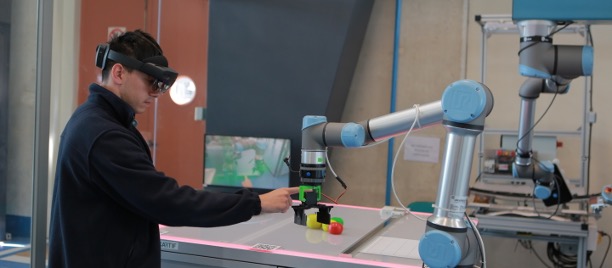
We are happy to share the recent publication “Human–Robot Interaction and Tracking System Based on Mixed Reality Disassembly Tasks” (Robotics 14(8):106), by Calderón‑Sesmero et al., which presents an innovative approach to human–robot collaboration through a mixed reality (MR) interface. The system allows operators to guide a collaborative robot using multimodal interaction—voice, gesture, and gaze—supported by AI-based object tracking and smart task validation.
The work explores how immersive technologies, when combined with deep learning and robotics, can reduce cognitive load, increase safety, and improve task efficiency in industrial disassembly operations. The proposed solution enables a more intuitive interaction between humans and robots, showing promising results both in terms of usability and performance.
This resonates strongly with ARISE’s mission to foster human-centric, adaptive, and accessible robotics in industrial settings. The use of real-time perception, seamless operator input, and robust system validation aligns with the principles ARISE promotes for developing safe and effective human–robot collaboration systems.
If you’re curious to learn more about how mixed reality and AI-driven perception can enhance industrial tasks, you can access the full article here.
Introduction to ARISE Social Sciences & Humanities (SSH)
Authors:
Tuukka Puonti and Mariela Urra Schiaffino – Demos Helsinky
As a social sciences and humanities (SSH) partner, Demos Helsinki is developing the Open SSH Framework for human-centric and ethical human-robot interaction (HRI) within the ARISE project. This work is centered on creating a scalable framework that extends beyond ARISE, integrating ethical principles, regulatory considerations, and industry standards to support responsible and sustainable HRI development. The first released version of this deliverable, “Initial Open SSH Framework for human-centric and ethical HRI”, focuses on assessing approaches and methodologies, particularly through contextual and ethnographic research, to gain insights into ethical challenges and opportunities in HRI. In addition, it integrates key European regulations, maps common ethical concerns, and highlights use cases that illustrate practical ethical questions in real-world robotic applications.
Industry 5.0 and SSH approach
The ARISE project aligns with the principles of Industry 5.0, which emphasizes human-centric, resilient, and sustainable work environments. This paradigm shift places values above mere technological advancement, fostering synergy between humans and machines to enhance overall well-being. At its core, Industry 5.0 aims to:
- Empower Individuals: By automating repetitive tasks, workers can engage in more intellectually stimulating endeavors.
- Promote Organizational Transformation: Prioritize human perspectives, utilizing technology and organizational structures as facilitators.
- Design Societal Frameworks: Develop technologies that embed human values from inception, emphasizing trustworthiness and human oversight.
Ethical, Legal & Social
The integration of robotics into human-centric work environments brings both challenges and opportunities. The ARISE project aims to create a unified framework addressing the ethical, legal, and social (ELS) aspects of HRI. While not exhaustive, this initial approach provides a foundation for understanding the broader implications of robotics and AI in various contexts.
A challenge in HRI is that ethical, legal, and social dimensions are often considered independently from technological development, making it difficult to develop cohesive frameworks that account for real-world complexities. ARISE aims to bridge this gap by focusing on how these dimensions interact and influence technology development, regulation, and adoption. Our framework understands these dimensions as:
- Ethical considerations focus on guiding principles, early-stage impact assessments, and turning high-level ethical frameworks into practical tools informed by empirical research.
- Legal aspects involve analyzing existing regulations relevant to HRI, monitoring legal developments, and providing evidence-based policy recommendations.
- Social dimensions explore how HRI affects labor markets, workplace dynamics, worker experiences, and societal norms, emphasizing participatory approaches and inclusivity.
HRI is inherently transdisciplinary, involving the study, design, and implementation of robotic systems that meaningfully interact with humans. This includes communication methods (verbal, non-verbal, digital) and shared workspaces where humans and robots collaborate seamlessly. By integrating ELS considerations, ARISE contributes to a more responsible and human-centric approach to robotics in society.
Contextual research through ethnography
Our initial findings suggested an existing gap between the existing methods and frameworks to assess ethical issues within AI and Robotics and their practical implementation. To bridge this gap, the SSH framework employs a multidisciplinary, qualitative and contextual research approach. This includes a literature review, interviews and notably, ethnographic site visits to the four Arise TEFs to gain insights into workflows and processes in HRI. The idea is to capture professionals’ values, aspirations, and needs concerning SSH perspectives, and identify current and potential practices where ethical considerations can be integrated into design and decision-making.

Photo by Mariela Urra Schiaffino
Key elements in the framework
Ethical Principles of ARISE
Ethical principles for HRI have been developed by multiple endeavors, including the Ethics by Design guidelines and the SHERPA and SIENNA projects, which draw largely from the work of the AI High-Level Expert Group (AI HLEG). These principles have not only been merged into ethical frameworks but have also served as the grounds for assessment tools designed to evaluate ethical aspects of robotics and artificial intelligence.
The general ethical principles in the Ethics by Design (1) approaches include respect for human agency, privacy and data governance, fairness, individual, social, and environmental well-being, transparency and accountability.
Beyond general AI ethics, research has also focused on ethical principles specific to HRI and Industry 5.0. By combining the existing AI ethics research and HRI research, we have updated the ethical principles to include two additional aspects of human-centricity:
- Respect for Human Agency (Ethics by Design)
- Privacy and Data governance (Ethics by Design)
- Fairness (Ethics by Design)
- Individual, Social and Environmental Well-being (Ethics by Design)
- Transparency (Ethics by Design)
- Accountability and Oversight (Ethics by Design)
- Worker Dignity and Equity (ARISE)
- Human Resilience Through Continuous Learning and Support (ARISE)
ARISE ethical impact assessment process
The project’s ethical impact assessment is iterative, drawing from established models like the SIENNA framework and the SATORI ethics impact assessment. Tailored for ARISE’s specific context, the process involves multiple phases: an initial external review to assess key ethical considerations, the development of an ethics action plan, ongoing ethics mentoring, an interim review to evaluate progress, a roadmap for long-term ethical implementation, and a final external review at project completion.
Collection of related European regulation and industry standards
A crucial part of the ARISE framework is the categorization of relevant industry standards and EU-level legislation related to HRI. These include binding regulations, ethical guidelines, AI-specific standards, robotics-focused standards, and general safety and human-centric guidelines.
Typically encountered ethical questions related to AI Systems
Common ethical questions in AI systems often revolve around, and which the SSH framework aims to address relate to: respect for human agency, privacy, fairness, individual, social and environmental well-being, transparency, and accountability and oversight. The combination of the aforementioned questions promote agency, autonomy and basic rights for human beings.
By proactively addressing these areas, the project aims to set benchmarks for ethical integration, sheltering the alignment of social expectations and human values with the deployment of AI-driven systems.
Collection of relevant use cases and examples of ethical concerns and questions
Finally, to ground the project’s ethical considerations in real-world scenarios, we present a diverse set of use cases illustrating various ethical challenges and best practices in HRI. These scenarios are based on the experiments carried out by each of the TEFs and range from battery disassembly in high-value products and fruit picking in industrial warehouses to autonomous medical sample transport in healthcare settings. By analyzing these examples, the project highlights both the ethical dilemmas and the potential solutions.
The development of the Arise Open SSH Framework is conceived as an iterative process that will be empirically tested and further improved throughout the course of the next two years of the project. It will be tested within the context of Arise, the open call HRI solutions and beyond, gathering feedback from diverse actors with an interest in advancing responsible, sustainable and human-centric HRI development.
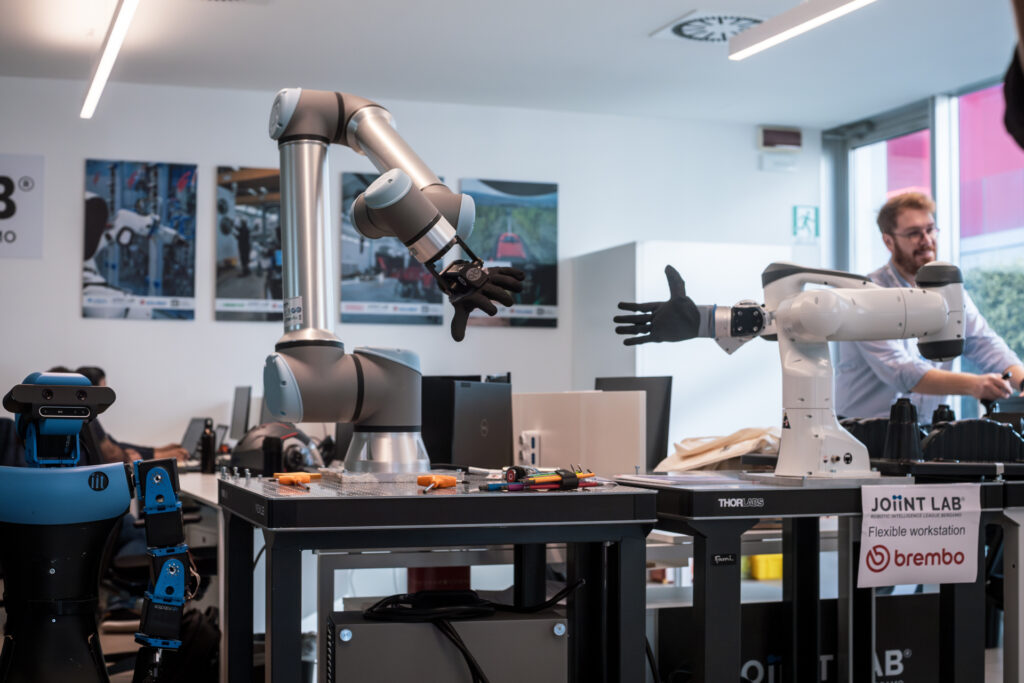
Photo by Mariela Urra Schiaffino
ARISE’s Key Achievements in 2024
As we reflect on the achievements of the ARISE project in 2024, we are proud to showcase a series of important deliverables that highlight the progress and impact of our efforts in the field of industrial human-robot interaction (HRI).
ARISE is dedicated to making industrial HRI deployments more accessible, cost-effective, and widespread across Europe. Central to this vision is the AgileHRI concept—a flexible and scalable framework designed to simplify the integration and operation of collaborative robots in industrial settings.
Throughout the first year of the project, we have made significant strides, not only in developing core technologies but also in validating their real-world applications. From the release of advanced software tools like the NGSI-LD Context Broker with native DDS support (D2.1) to the launch of the first versions of the Vulcanexus middleware (D2.2), ARISE has set a solid foundation for enhancing industrial automation. Our ongoing work in open-source development, ethical HRI frameworks, and testing through the project’s Testing and Experimentation Facilities (TEFs) is driving the adoption of the AgileHRI approach across various industries.
We are excited to present the following twelve key outputs – now available to download – , which underscore the progress made in 2024 – download available here:
1.- D2.1 – NGSI-LD Context Broker with native DDS Support
2.- D2.2 – ARISE Vulcanexus Releases 1
3.- D2.5 – Library of Open modules for agile Industrial HRI development & Periodic Report on ROS4HRI v1
4.- D2.8 – Open APIs and smart data models for industrial HRI
5.- D3.1 – Initial Open SSH Framework for human-centric and ethical HRI
6.-D3.4 – ARISE’s Ethics Summary Reports v1
7.- D4.1 – Requirements specifications for the TEF’s illustrative Use Cases
8.- D4.2 – Full Description of TEF’s Setup and Use Cases
9.- D4.3 – Periodic Report on the ARISE Testing and Experimentation Facilities v1
10.- D5.1 – Call Announcement and Guide for Applicants
11.- D7.1 – Communication & Dissemination Plan
12.- D7.2 – Exploitation, Communication and Dissemination Updates Y1
Take a moment to explore and discover. We invite you to read through the details, enjoy the insights, and stay tuned for more exciting updates in the coming phases of the project!
ARISE 1st Open Call Results Empowering European Industry with Human-Robot Interaction
The ARISE project has reached an exciting milestone with the successful conclusion of its 1st Open Call on January 16, 2025. This call attracted 126 eligible applications from 22 countries, showcasing a strong and diverse interest in advancing industrial Human-Robot Interaction (HRI). Among the most active regions were Spain, Italy, and Greece.
The main goal of ARISE is to simplify, reduce the cost of, and expand the adoption of industrial HRI deployments across Europe. This is achieved by developing the concept of AgileHRI, a holistic framework that accelerates innovation by combining human-centricity, agility, and openness as key enablers of end-user value.
Our Testing and Experimentation Facilities (TEFs) demonstrate this AgileHRI concept in real-world scenarios of collaborative robotics applications, addressing eight different challenges/use cases. These focus on enhancing human performance in challenging industrial tasks and increasing the inclusiveness and safety of industrial workplaces. These use cases will be complemented by the HRI applications developed by the Open Call’s selected beneficiaries (SMEs and end-users).
Through this Open Call, ARISE seeks collaborative robotics solutions that address specific workplace needs. These solutions will focus on facilitating, accelerating, or enabling workers to achieve better performance while improving overall conditions. The emphasis is on human-centric, value-driven innovation that empowers workers and enhances their roles.
Of the eight predefined challenges proposed to the applicants, the following were the most popular:
- Enhanced robot functionality through multimodal HRI interactions.
- HRI for improving efficiency in high-precision flexible tasks.
- Flexible collaborative robots.
The ARISE consortium is now preparing for the deep evaluation phase, ensuring a rigorous selection process to identify the most impactful and innovative proposals. Selected projects will receive:
- Funding of up to €200,000 per project;
- Access to a 12-month mentoring programme, supported by technical, Social Sciences and Humanities (SSH), and business experts;
- Shared resources around the ARISE methodology and technology framework;
- Networking opportunities with DIHs, SMEs, and other experts across Europe by accessing ARISE’s Discord server.
Beyond funding, our aim is to actively engage innovators (SMEs, end-users, TEFs, and other technical experts and researchers) in a pioneering Community of Practice for knowledge sharing, co-creation, collaboration, and the long-term sustainability of ARISE’s technologies and methodologies.
Stay tuned for updates on the selected projects and the groundbreaking innovations they will bring to life. As the ARISE programme continues to unfold, we are confident it will inspire a new wave of human-centric robotic solutions, reinforcing Europe’s leadership in advanced manufacturing.
For more information and updates about ARISE, follow our news section on our website and our LinkedIn channel.
Our Expression of Interest is officially open!
Be one step ahead of your competitors in getting funding!
The ARISE consortium is pleased to announce the Expression of Interest – the initial phase of our 1st project’s Open Call, set to launch in autumn 2024! This opportunity will provide up to EUR 200,000 to consortia developing HRI-enabled solutions for industrial robotics automation projects.
Why Apply for the Expression of Interest?
- Industry Validation: Applying for the Expression of Interest validates your role in the open call application as an End-user.
- Consortium Formation: This validation is crucial for forming successful consortia during the 1st ARISE Open Call – as the list of validated participants will be published for applicants, your chance to be chosen for the consortium is much higher.
Don’t miss this opportunity to validate your role and increase your chances of forming a thriving consortium. Apply now to stay ahead of the competition and secure your place in the future of industrial automation.
Check out the our first info webinar on the expression of interest:
Validate your organisation!