
AUTOMATHA: Pioneering a Safer, Smarter Future for Manufacturing


Precision manufacturing isn’t just about aesthetics; it’s about consistency, durability, and safety. Consider ski boots: behind each product lies a delicate, often hazardous process of surface treatment for pad printing, usually involving manual tasks with toxic chemicals or highly specialized robot programming.

The traditional approach brings multiple problems: health risks, long setup times, and limited adaptability for product variations. It slows innovation, and endangers workers.

AUTOMATHA, supported by ARISE, is setting a new standard for intelligent, human-friendly automation. Through a collaboration between Eureka System and Tecnica Group, we’re bringing together robotics, AI, 3D vision, and plasma technology in one unified system.

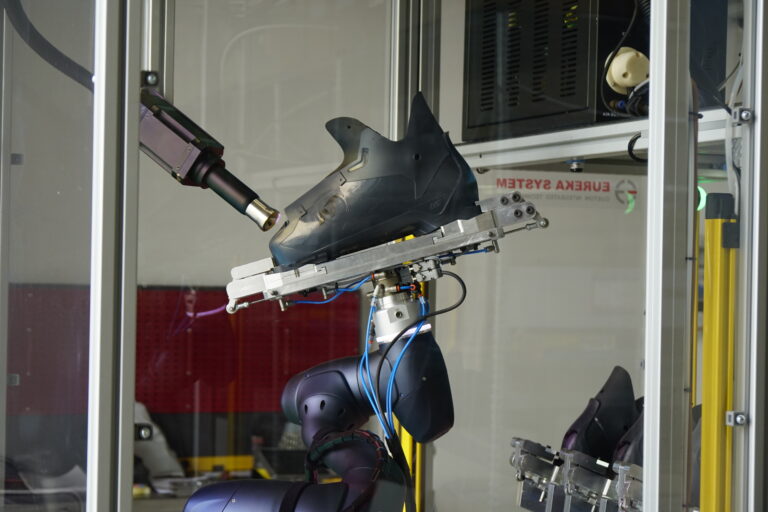
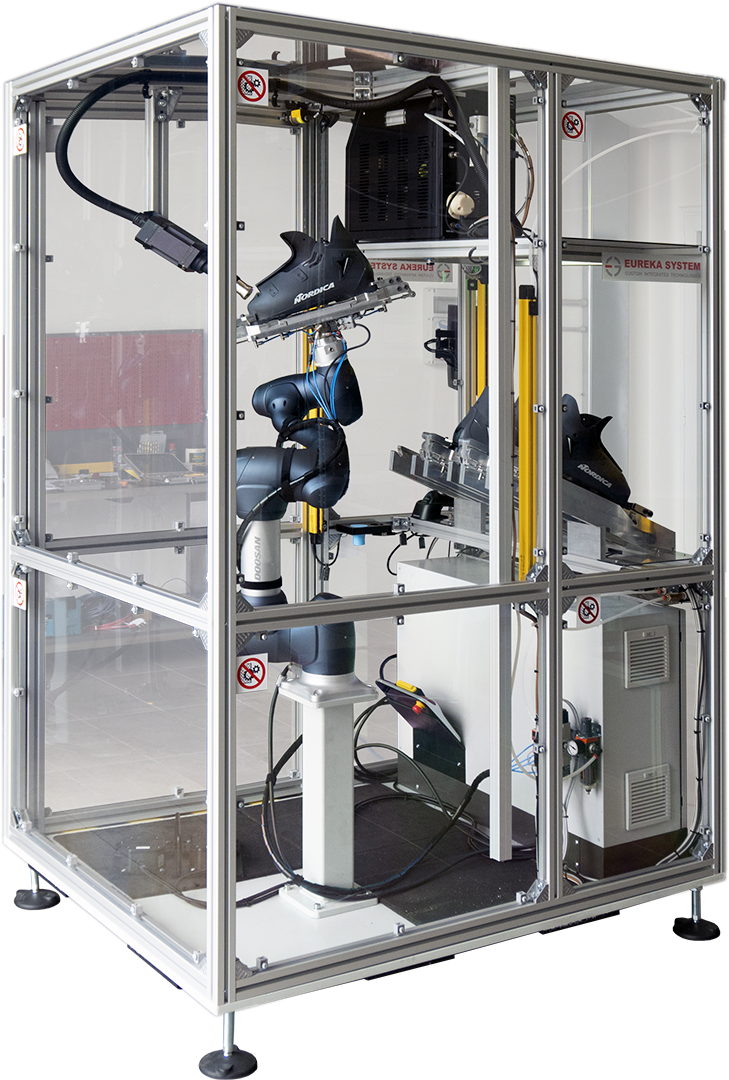
At its core, AUTOMATHA replaces hazardous chemical treatments with a plasma torch mounted on a collaborative robot. But what truly sets it apart is how it learns. With video and laser scanning, our system reconstructs 3D models of each product variant. AI then pinpoints the exact treatment zones and generates the robotic path — automatically. No manual programming required. The result? Setup times reduced by over 50%.

Putting People at the Center of Automation

Rather than sidelining workers, AUTOMATHA is designed to amplify their role. Healthier workplaces mean no more exposure to harmful solvents — a big win for occupational safety. Operators are empowered with intuitive tools, shifting from repetitive programming to high-level supervision and quality control. And by reducing both physical strain and the need for advanced robotic skills, work environments become more inclusive and open to a broader, more diverse workforce. By minimizing risk and maximizing skill, AUTOMATHA helps manufacturing become smarter and more equitable.

Open-Source Innovation at Work

Aligned with ARISE’s mission, AUTOMATHA is delivering a powerful ROS2-based 3D reconstruction module that’s ready for reuse across sectors. This plug-and-play module includes advanced 3D model reconciliation for seamless geometry handling across workstations, outlier removal and path generation to ensure accuracy and efficiency in every movement, and rapid deployment tools that shorten deployment cycles for industrial robotics.

We’re building on ROS2 Vulcanexus for robust system integration, and FIWARE middleware for real-time interoperability and smart factory data flow. These components are not just tools — they’re enablers of a more open, collaborative future for industrial automation.

While AUTOMATHA starts with the pre-pad-printing tasks in the sportswear sector, its modular design is easily adaptable to other industries requiring precise, surface-level treatments on variable items. The addressable European market in high-end manufacturing alone is worth between €6 and €8 Billion. Tecnica Group anticipates an ROI of just 18 months on the first deployment, shrinking to 12 for future rollouts. Eureka System aims for €3 Million in revenue by Year 3 through scalable installations, customization services, and recurring contracts.

Most importantly, AUTOMATHA supports the reshoring of manufacturing to Europe, reduces environmental harm, and fosters a more skilled, inclusive workforce — perfectly aligned with the European Green Deal.

AUTOMATHA is more than just a robotics upgrade — it’s a new philosophy for industrial progress. By combining AI, safety, and sustainability, we’re shaping a future where automation uplifts people and powers innovation.

Follow our journey as we transform factories into smarter, safer, and more human workplaces.

Learn more

Eureka System
Tecnica Group
Technical description of the pilot application (Italian)
ARISE-AUTOMATHA
Related Articles

On the Ground Insights Informing the SSH Framework

March 24, 2026

In September of 2024, three of our researchers from Demos Helsinki arrived in Barcelona at the headquarters of PAL Robotics– a robotics company specializing in biped humanoid robotics. Unlike many of the visitors that PAL receives, we didn’t have much to offer in terms of technical or business expertise. Instead, we were there as ethnographers– documenting, observing, and engaging with robotics developers to understand how robots get built. In visiting the spaces where robotics development takes place, we were hoping to understand how we might develop a framework for human-centric robotics innovation that aligns with the day to day realities of HRI work.

PAL was only the first of several destinations. Over the next 2 weeks, we would listen in on team meetings, interview workers individually, host workshops, and collect over 12 hours of recordings of interactions we shared with robotics developers across 4 organizations. The HRI workers we met were generous with their time and candidness– they spoke openly about a range of topics from project management tools to internal team dynamics to the role that science fiction played in shaping their robot designs. 

From this body of qualitative data, we took note of insights that might help us develop an SSH framework for human-centricity that’s tailored for HRI contexts. After a preliminary round of analysis, we grouped our learnings into 4 overarching themes: 

  1. Structured and hierarchical decision-making: HRI work typically takes place in highly structured environments with a clear division of responsibility, agreed upon deadlines, and consistent workflows. Bringing in novel considerations, such as human centricity and ethics, into this highly structured work environment can be seen as disruptive rather than productive if not carefully introduced. Higher-level decision making may also not be accessible to everyone working on the project, nor at every phase of the project, leading to challenges in ownership and accountability when it comes to addressing emerging ethical concerns. 
  2. Limited capacity for interdisciplinarity: Due to the highly technical and complex nature of robotics development, HRI workers are often expected to utilize their specialized backgrounds to contribute to a niche part of the robotic solution, limiting their interactions with other teams and experts to what’s strictly necessary. HRI workers might encounter difficulties thinking in interdisciplinary terms because of the lack of shared language around human centricity in HRI development, the limited contextual scope of their contribution relative to the entire solution, and a general lack of time, energy, and resources for building new capacities.
  3. Context specific needs and challenges: Different HRI contexts pose different needs and challenges when it comes to ethics and human centricity. The type of organization the HRI solution is being developed in, target stakeholders, deployment contexts, cultural norms– all of these play a role in shaping how a team is able to conceptualize and mitigate ethical concerns. Developing a SSH framework that can be operationalized in a variety of contexts likely requires a carefully balanced, adaptable approach of both specificity and generalizability. 
  4. Leveraging existing norms, trends, and practices: While there are a number of reasons why HRI contexts might be resistant or unable to incorporate SSH perspectives, our team also came across existing norms and practices that might be leveraged to support human-centric robotics development. For instance, HRI developers typically work in iteration, incorporating learnings and failures in cycles of experiments. These cycles might be opportunities to inject small, manageable actions to continuously embed SSH perspectives and support.


Relying on the foundations of these four themes, we wrote the updated release of the ARISE SSH Framework (D3.2) in December of 2026**. Recognizing the needs and challenges of HRI work from our ethnographic visits, this second release focuses on operationalizing high level principles with concrete recommendations for frameworks, tools, and processes that can be adapted in HRI workflows.

Entering the final year of the ARISE project, our work continues to build on the belief that an informed and actionable ethics framework requires on-the-ground engagement. Throughout the open call process, our team is collaborating directly with beneficiary projects, engaging them in workshops and one on one discussions about their project’s ethics management approach.

The more we progress in this project the more it becomes apparent that the future of human-centric robotics starts with a willingness to open dialogue across disciplinary boundaries, whether that be in the digital spaces of a video conference or the break room of a robotics lab, surrounded by bi-pedal robots.

**This framework isn’t available for public viewing yet, but will be linked when it becomes available. Both deliverables already published are available in our resources page.

ARISE and FIWARE in the ADRA Book: Building Open Digital Infrastructures for Robotics

The recently published open-access book “Artificial Intelligence, Data and Robotics: Foundations, Transformations and Future Directions” provides a comprehensive overview of the technologies and initiatives shaping Europe’s digital future.

Published within the framework of the AI, Data and Robotics Association (ADRA), the book reflects the collective work of the European AI-Data-Robotics ecosystem, bringing together researchers, innovation projects, and industry stakeholders working to accelerate the development and deployment of these technologies across Europe.

Among the initiatives featured in the book is ARISE, together with its sister projects FORTIS and JARVIS, which are highlighted in the chapter Advancing Industrial Collaboration: The Next Generation of Human-Robot Interaction.

The book reflects the broader strategic vision behind the European AI, Data and Robotics Partnership, which aims to strengthen Europe’s leadership in these technologies while ensuring that innovation remains human-centric, trustworthy and aligned with European values.

Artificial intelligence, robotics and data technologies are increasingly converging to create new possibilities across sectors such as manufacturing, mobility, environmental monitoring and healthcare. This convergence is explored in the chapter “Data, AI, Robotics: Transformative Power in Industry 5.0” where the authors (among them partners in the ARISE project Polimi, Engineering and Cartif) explain how Industry 5.0 builds on the foundations of Industry 4.0 by integrating human-centric, resilient and sustainable manufacturing practices. This chapter reviews a series of European initiatives and industrial pilot cases demonstrating how AI, robotics and data technologies can support circular manufacturing processes, data sharing across value chains and new decision-support capabilities through technologies such as digital twins and real-time industrial data infrastructures.

However, unlocking the full potential of these technologies requires more than individual innovations. It requires digital infrastructures that allow heterogeneous systems to interoperate and share data seamlessly.

This is where open digital infrastructures become essential. Across the European ecosystem, researchers and innovators are increasingly focusing on building interoperable platforms and architectures that allow AI systems, robotics technologies and data infrastructures to work together across domains.

ARISE: contributing to the next generation of human-robot collaboration

In our chapter, we explore (together with our sister projects JARVIS and FORTIS) the evolution of human-robot interaction (HRI) and the technological foundations required to support collaborative robotics in industrial environments.

In particular, we present the ARISE framework, designed to accelerate the deployment of collaborative robotics systems that integrate human expertise with advanced automation technologies. Through experimentation in Testing and Experimentation Facilities (TEFs) and collaboration with SMEs, ARISE aims to bridge the gap between research and real industrial deployment.

Our work focuses on enabling more intuitive interaction between humans and robots, safer collaboration in industrial settings, scalable robotics deployments, and the integration of artificial intelligence into industrial decision-making processes.

FIWARE and ROS2: an open middleware for industrial robotics

A key innovation highlighted in the book is the architectural approach used in ARISE.

The project integrates FIWARE technologies with ROS2 robotics frameworks, creating an open middleware that enables interoperability between robotic systems, industrial applications and AI services.

This architecture allows data to flow seamlessly between robots, digital platforms and industrial systems, enabling:

  • real-time monitoring of robotic operations

  • integration of AI-based services

  • coordination between robots and industrial systems

  • scalable deployment of robotics applications.

By combining ROS2 robotics capabilities with FIWARE context-management technologies, ARISE demonstrates how open-source platforms can create a flexible and interoperable digital infrastructure for robotics.

This interoperability layer is essential for enabling complex industrial environments where robots, machines, sensors and digital platforms must work together.

Interoperable data infrastructures for AI and robotics

The role of FIWARE technologies is not limited to robotics architectures.

In another chapter of the book, dedicated to the CyclOps project, “CyclOps: Leveraging Semantic Technologies for AI and Data Life Cycle Management and Governance”, FIWARE technologies appear again through the use of NGSI-LD context brokers, which support interoperable data exchange and semantic data management across distributed environments.

FIWARE-based interoperability approaches are also referenced in discussions around emerging data ecosystems, such as in the chapter “Toward the Irish Mobility Data Space: Challenges, Opportunities, and Requirements”, which explores the technological foundations needed to enable cross-domain mobility data spaces.

Context brokers such as Orion-LDStellio and Scorpio, available within the FIWARE ecosystem, enable the storage, retrieval and sharing of contextual information across domains such as smart cities, Industry 4.0 and IoT applications.

These technologies illustrate how standardized data infrastructures can support the integration of AI and robotics systems within broader digital ecosystems.

Toward open digital infrastructures for robotics

Taken together, the projects and technologies presented in the book highlight an important transformation in the way Europe approaches technological innovation.

Rather than focusing solely on isolated technological components, the European AI-Data-Robotics ecosystem is increasingly building open digital infrastructures that allow different technologies to work together across sectors and domains.

Within this vision:

  • ARISE contributes to the development of human-centric robotics systems

  • FIWARE provides the interoperable data infrastructure that connects digital services, AI applications and industrial systems

This combination of open platforms, interoperable data architectures and collaborative robotics represents a key step toward the realization of Industry 5.0.

The inclusion of ARISE in this ADRA publication highlights the project’s contribution to Europe’s rapidly evolving AI, Data and Robotics ecosystem. By combining open-source technologies, interoperable architectures and human-centric design, ARISE demonstrates how collaborative robotics can be deployed in ways that enhance human capabilities while supporting industrial innovation. At the same time, the broader presence of FIWARE technologies across different chapters of the book reflects the growing importance of open standards and interoperable data infrastructures as foundations for the next generation of digital systems.

Together, initiatives such as ARISE and FIWARE are helping to build the open digital infrastructures that will support Europe’s future in AI, data and robotics.

VITAWELD: Vision, Intelligence and Human-Robot Teaming for the Future of Welding

VITAWELD tackles one of the most persistent challenges in industrial manufacturing: welding large metal components without compromising quality, efficiency, or accessibility. Traditional processes struggle with heat-induced distortions, late detection of defects, and manual parameter adjustments that slow production and introduce variability. Programming industrial robots for such tasks requires advanced technical expertise, creating a barrier for companies with limited resources.

The solution brings a fundamentally different approach to welding automation

VITAWELD blends advanced computer vision, AI, and natural user interfaces to keep the operator in control while enhancing their capabilities. The system enables robot programming through natural language and real-time visualization in augmented reality, making adjustments intuitive and immediate. AI-powered vision algorithms detect potential defects as they happen, while automated parameter optimization ensures repeatability and minimizes waste. Built on a modular ROS 2 and FIWARE architecture, the platform can adapt to different industrial contexts and scale with changing needs.

Within the ARISE project, VITAWELD exemplifies how collaborative robotics can democratize access to advanced automation. FIWARE integration ensures interoperability and supports a standards-based approach, making the solution replicable across industries. Most importantly, it reflects a vision where technology empowers rather than replaces, aligning closely with the principles of Industry 5.0.

The impact is measurable

Early projections indicate a reduction of more than 50% in robot programming time, over 30% improvement in first-time-right weld quality, and the ability to train new operators in less than two days. Energy consumption could be reduced by 15%, with significant savings in material waste. These advances not only improve productivity but also make welding safer and less physically demanding, encouraging greater diversity in the workforce.

Market potential is equally strong

The global industrial human-robot interaction market is expected to reach $8.6 billion by 2025, with the large-component welding segment valued at $1.2 billion. By focusing on amplifying human capabilities rather than replacing them, VITAWELD differentiates itself from conventional automation. Its modular design and human-centered philosophy allow rapid adaptation to other processes such as TIG, MIG, and additive manufacturing, delivering a return on investment in just 18 to 24 months.

Inclusivity is embedded in the design

Interfaces are multilingual and configurable, with universal iconography and color-blind-friendly visualizations. Ergonomic considerations accommodate operators of different heights, handedness, and working styles. The system can adapt to local cultural norms in units of measurement, alerts, and training materials, ensuring usability across global manufacturing environments.

VITAWELD represents more than a technical solution—it redefines the relationship between people and machines in industrial welding. By combining precision, adaptability, and inclusivity, it sets a new standard for human-robot teaming, one where innovation strengthens human expertise, fosters sustainable manufacturing, and builds a safer, more productive future.

Rovimática S.L.
IDONIAL Centro Tecnológico
ARISE – VITAWELD

Privacy Overview

This website uses cookies so that we can provide you with the best user experience possible. Cookie information is stored in your browser and performs functions such as recognising you when you return to our website and helping our team to understand which sections of the website you find most interesting and useful.

More information in  Privacy Policy.