
March 24, 2026
In September of 2024, three of our researchers from Demos Helsinki arrived in Barcelona at the headquarters of PAL Robotics– a robotics company specializing in biped humanoid robotics. Unlike many of the visitors that PAL receives, we didn’t have much to offer in terms of technical or business expertise. Instead, we were there as ethnographers– documenting, observing, and engaging with robotics developers to understand how robots get built. In visiting the spaces where robotics development takes place, we were hoping to understand how we might develop a framework for human-centric robotics innovation that aligns with the day to day realities of HRI work.
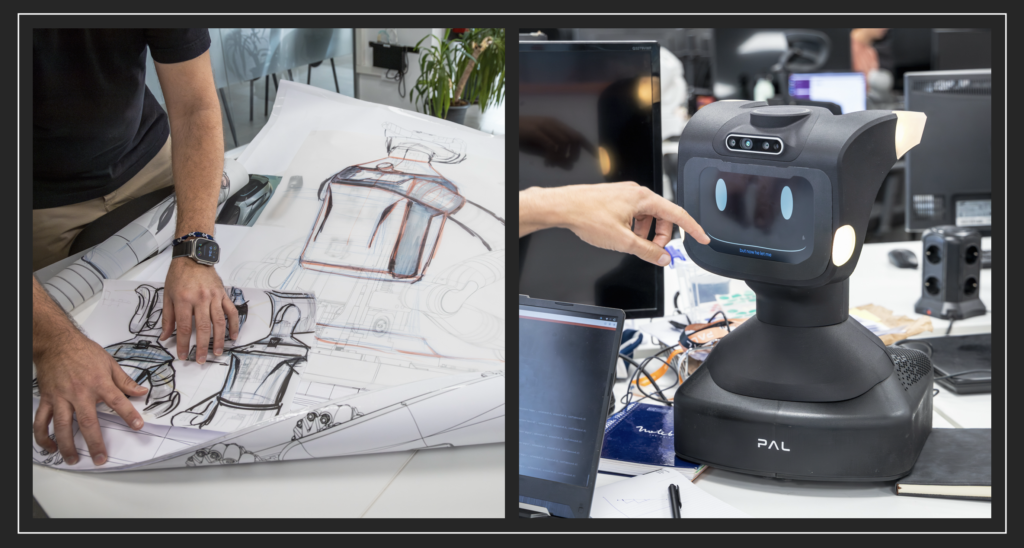
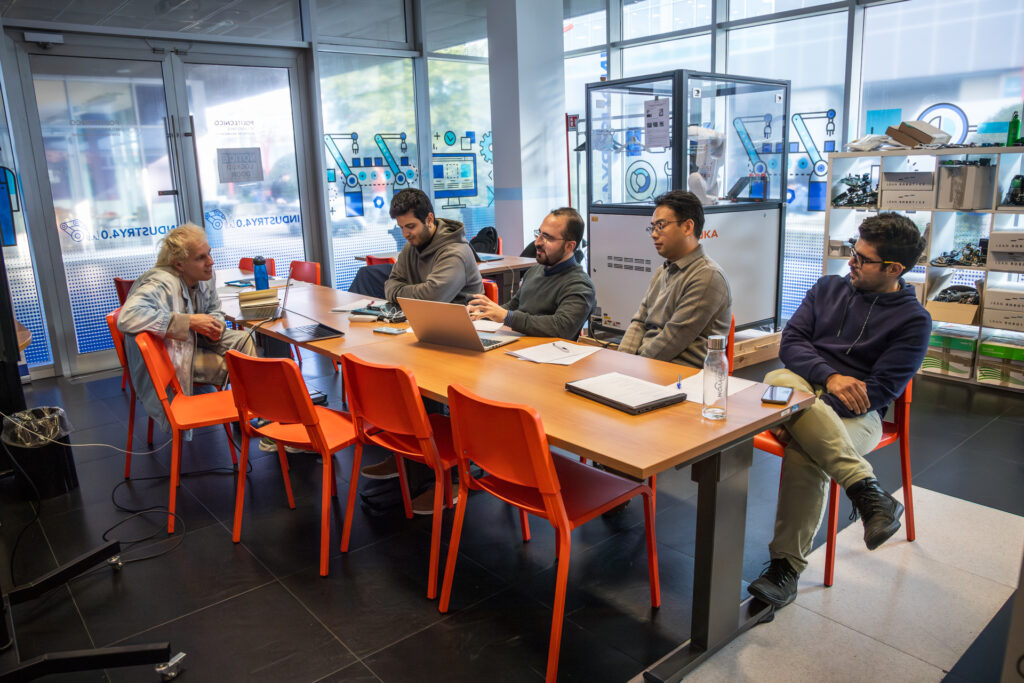
PAL was only the first of several destinations. Over the next 2 weeks, we would listen in on team meetings, interview workers individually, host workshops, and collect over 12 hours of recordings of interactions we shared with robotics developers across 4 organizations. The HRI workers we met were generous with their time and candidness– they spoke openly about a range of topics from project management tools to internal team dynamics to the role that science fiction played in shaping their robot designs.
From this body of qualitative data, we took note of insights that might help us develop an SSH framework for human-centricity that’s tailored for HRI contexts. After a preliminary round of analysis, we grouped our learnings into 4 overarching themes:
- Structured and hierarchical decision-making: HRI work typically takes place in highly structured environments with a clear division of responsibility, agreed upon deadlines, and consistent workflows. Bringing in novel considerations, such as human centricity and ethics, into this highly structured work environment can be seen as disruptive rather than productive if not carefully introduced. Higher-level decision making may also not be accessible to everyone working on the project, nor at every phase of the project, leading to challenges in ownership and accountability when it comes to addressing emerging ethical concerns.
- Limited capacity for interdisciplinarity: Due to the highly technical and complex nature of robotics development, HRI workers are often expected to utilize their specialized backgrounds to contribute to a niche part of the robotic solution, limiting their interactions with other teams and experts to what’s strictly necessary. HRI workers might encounter difficulties thinking in interdisciplinary terms because of the lack of shared language around human centricity in HRI development, the limited contextual scope of their contribution relative to the entire solution, and a general lack of time, energy, and resources for building new capacities.
- Context specific needs and challenges: Different HRI contexts pose different needs and challenges when it comes to ethics and human centricity. The type of organization the HRI solution is being developed in, target stakeholders, deployment contexts, cultural norms– all of these play a role in shaping how a team is able to conceptualize and mitigate ethical concerns. Developing a SSH framework that can be operationalized in a variety of contexts likely requires a carefully balanced, adaptable approach of both specificity and generalizability.
- Leveraging existing norms, trends, and practices: While there are a number of reasons why HRI contexts might be resistant or unable to incorporate SSH perspectives, our team also came across existing norms and practices that might be leveraged to support human-centric robotics development. For instance, HRI developers typically work in iteration, incorporating learnings and failures in cycles of experiments. These cycles might be opportunities to inject small, manageable actions to continuously embed SSH perspectives and support.
Relying on the foundations of these four themes, we wrote the updated release of the ARISE SSH Framework (D3.2) in December of 2026**. Recognizing the needs and challenges of HRI work from our ethnographic visits, this second release focuses on operationalizing high level principles with concrete recommendations for frameworks, tools, and processes that can be adapted in HRI workflows.
Entering the final year of the ARISE project, our work continues to build on the belief that an informed and actionable ethics framework requires on-the-ground engagement. Throughout the open call process, our team is collaborating directly with beneficiary projects, engaging them in workshops and one on one discussions about their project’s ethics management approach.
The more we progress in this project the more it becomes apparent that the future of human-centric robotics starts with a willingness to open dialogue across disciplinary boundaries, whether that be in the digital spaces of a video conference or the break room of a robotics lab, surrounded by bi-pedal robots.
**This framework isn’t available for public viewing yet, but will be linked when it becomes available. Both deliverables already published are available in our resources page.