
Authors:
Tuukka Puonti and Mariela Urra Schiaffino – Demos Helsinky
As a social sciences and humanities (SSH) partner, Demos Helsinki is developing the Open SSH Framework for human-centric and ethical human-robot interaction (HRI) within the ARISE project. This work is centered on creating a scalable framework that extends beyond ARISE, integrating ethical principles, regulatory considerations, and industry standards to support responsible and sustainable HRI development. The first released version of this deliverable, “Initial Open SSH Framework for human-centric and ethical HRI”, focuses on assessing approaches and methodologies, particularly through contextual and ethnographic research, to gain insights into ethical challenges and opportunities in HRI. In addition, it integrates key European regulations, maps common ethical concerns, and highlights use cases that illustrate practical ethical questions in real-world robotic applications.
Industry 5.0 and SSH approach
The ARISE project aligns with the principles of Industry 5.0, which emphasizes human-centric, resilient, and sustainable work environments. This paradigm shift places values above mere technological advancement, fostering synergy between humans and machines to enhance overall well-being. At its core, Industry 5.0 aims to:
- Empower Individuals: By automating repetitive tasks, workers can engage in more intellectually stimulating endeavors.
- Promote Organizational Transformation: Prioritize human perspectives, utilizing technology and organizational structures as facilitators.
- Design Societal Frameworks: Develop technologies that embed human values from inception, emphasizing trustworthiness and human oversight.
Ethical, Legal & Social
The integration of robotics into human-centric work environments brings both challenges and opportunities. The ARISE project aims to create a unified framework addressing the ethical, legal, and social (ELS) aspects of HRI. While not exhaustive, this initial approach provides a foundation for understanding the broader implications of robotics and AI in various contexts.
A challenge in HRI is that ethical, legal, and social dimensions are often considered independently from technological development, making it difficult to develop cohesive frameworks that account for real-world complexities. ARISE aims to bridge this gap by focusing on how these dimensions interact and influence technology development, regulation, and adoption. Our framework understands these dimensions as:
- Ethical considerations focus on guiding principles, early-stage impact assessments, and turning high-level ethical frameworks into practical tools informed by empirical research.
- Legal aspects involve analyzing existing regulations relevant to HRI, monitoring legal developments, and providing evidence-based policy recommendations.
- Social dimensions explore how HRI affects labor markets, workplace dynamics, worker experiences, and societal norms, emphasizing participatory approaches and inclusivity.
HRI is inherently transdisciplinary, involving the study, design, and implementation of robotic systems that meaningfully interact with humans. This includes communication methods (verbal, non-verbal, digital) and shared workspaces where humans and robots collaborate seamlessly. By integrating ELS considerations, ARISE contributes to a more responsible and human-centric approach to robotics in society.
Contextual research through ethnography
Our initial findings suggested an existing gap between the existing methods and frameworks to assess ethical issues within AI and Robotics and their practical implementation. To bridge this gap, the SSH framework employs a multidisciplinary, qualitative and contextual research approach. This includes a literature review, interviews and notably, ethnographic site visits to the four Arise TEFs to gain insights into workflows and processes in HRI. The idea is to capture professionals’ values, aspirations, and needs concerning SSH perspectives, and identify current and potential practices where ethical considerations can be integrated into design and decision-making.

Photo by Mariela Urra Schiaffino
Key elements in the framework
Ethical Principles of ARISE
Ethical principles for HRI have been developed by multiple endeavors, including the Ethics by Design guidelines and the SHERPA and SIENNA projects, which draw largely from the work of the AI High-Level Expert Group (AI HLEG). These principles have not only been merged into ethical frameworks but have also served as the grounds for assessment tools designed to evaluate ethical aspects of robotics and artificial intelligence.
The general ethical principles in the Ethics by Design (1) approaches include respect for human agency, privacy and data governance, fairness, individual, social, and environmental well-being, transparency and accountability.
Beyond general AI ethics, research has also focused on ethical principles specific to HRI and Industry 5.0. By combining the existing AI ethics research and HRI research, we have updated the ethical principles to include two additional aspects of human-centricity:
- Respect for Human Agency (Ethics by Design)
- Privacy and Data governance (Ethics by Design)
- Fairness (Ethics by Design)
- Individual, Social and Environmental Well-being (Ethics by Design)
- Transparency (Ethics by Design)
- Accountability and Oversight (Ethics by Design)
- Worker Dignity and Equity (ARISE)
- Human Resilience Through Continuous Learning and Support (ARISE)
ARISE ethical impact assessment process
The project’s ethical impact assessment is iterative, drawing from established models like the SIENNA framework and the SATORI ethics impact assessment. Tailored for ARISE’s specific context, the process involves multiple phases: an initial external review to assess key ethical considerations, the development of an ethics action plan, ongoing ethics mentoring, an interim review to evaluate progress, a roadmap for long-term ethical implementation, and a final external review at project completion.
Collection of related European regulation and industry standards
A crucial part of the ARISE framework is the categorization of relevant industry standards and EU-level legislation related to HRI. These include binding regulations, ethical guidelines, AI-specific standards, robotics-focused standards, and general safety and human-centric guidelines.
Typically encountered ethical questions related to AI Systems
Common ethical questions in AI systems often revolve around, and which the SSH framework aims to address relate to: respect for human agency, privacy, fairness, individual, social and environmental well-being, transparency, and accountability and oversight. The combination of the aforementioned questions promote agency, autonomy and basic rights for human beings.
By proactively addressing these areas, the project aims to set benchmarks for ethical integration, sheltering the alignment of social expectations and human values with the deployment of AI-driven systems.
Collection of relevant use cases and examples of ethical concerns and questions
Finally, to ground the project’s ethical considerations in real-world scenarios, we present a diverse set of use cases illustrating various ethical challenges and best practices in HRI. These scenarios are based on the experiments carried out by each of the TEFs and range from battery disassembly in high-value products and fruit picking in industrial warehouses to autonomous medical sample transport in healthcare settings. By analyzing these examples, the project highlights both the ethical dilemmas and the potential solutions.
The development of the Arise Open SSH Framework is conceived as an iterative process that will be empirically tested and further improved throughout the course of the next two years of the project. It will be tested within the context of Arise, the open call HRI solutions and beyond, gathering feedback from diverse actors with an interest in advancing responsible, sustainable and human-centric HRI development.
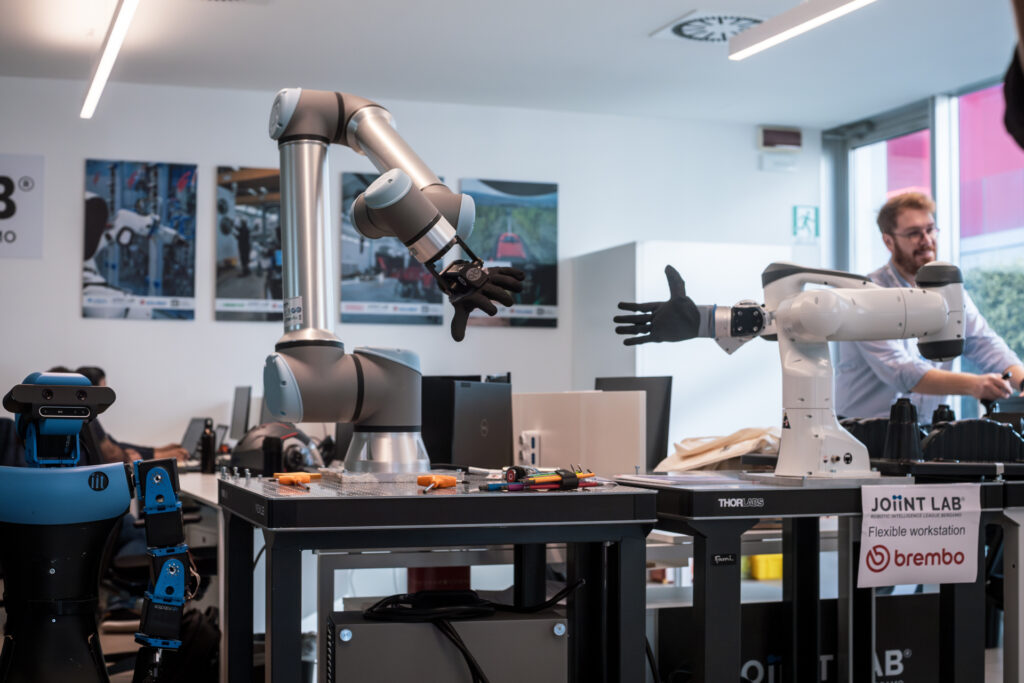
Photo by Mariela Urra Schiaffino